
The Networked Brain: Leading Teams Through the Synergy of AI and DevOps
- John Adams

- Aug 23, 2025
- 8 min read
The sheer complexity of modern systems often leaves even the most experienced IT leaders scratching their heads, metaphorically speaking. We're not just managing networks anymore; we are orchestrating ecosystems woven from hardware, software, data streams, user interactions, and security layers. It’s a symphony without sheet music, demanding unprecedented levels of coordination, visibility, and intelligence. This is where the 'Networked Brain' concept becomes crucial – blending human leadership with artificial intelligence capabilities within the DevOps framework isn't just desirable; it's becoming essential survival.
The traditional way of thinking about network management felt flimsy against this backdrop. We were juggling tickets, reacting to outages like startled squirrels surrounded by nuts dropped by increasingly sophisticated yet hard-to-predict systems. The lack of deep insight into performance trends or anomaly detection was a constant frustration. Monitoring tools told us what wasn't working, but often failed spectacularly at explaining why. This opacity breeds inefficiency, finger-pointing, and firefighting disguised as strategic planning.
Pain Points in Large-Scale Networking & Automation (The 'Why')

Scaling automation without adequate observability is like trying to navigate a dense fog with a GPS that only occasionally updates your position. You can automate tasks, but understanding the health of the entire system – from edge devices to core routers and everything in between – remains elusive for many teams.
Inadequate Visibility: We often rely on static dashboards showing averages or totals, losing crucial context about individual components' behaviour within a distributed environment.
Slow Incident Response: The reactive nature of traditional monitoring means significant issues can fester before they impact users. Root cause analysis becomes an archaeological dig after the fact.
Skills Gap & Burnout: Network engineers wear too many hats – designing, deploying, troubleshooting, automating. Adding AI complexity without proper strategy creates anxiety and a widening skills gap.
Breaking Silos (Again): Integrating network functions with other infrastructure domains like compute and storage requires breaking down organizational barriers that often mirror technical ones.
This isn't just about feeling overwhelmed; it's fundamentally inefficient. We need tools that provide deeper understanding, faster response times, and empower our teams to handle complexity proactively rather than being constantly reactive to chaos.
Emerging Solution: AI-Powered Observability and Incident Response (The 'What')
Enter Artificial Intelligence. It’s not a magic bullet replacing human ingenuity entirely – far from it. Instead, think of AI as an incredibly sophisticated collaborator or perhaps the most advanced tool we can build for itself.
AI-powered observability leverages machine learning to analyze vast amounts of network data points that were previously unmanageable: logs, packet captures (pcaps), configuration changes, NetFlow/sFlow data, SNMP traps. It doesn't just report averages; it identifies subtle correlations and patterns indicative of potential problems before they become critical. This is where the 'brain' part comes in – AI can process complex information far beyond human capacity for timely pattern recognition.
Similarly, AI-driven incident response tools aren't just smarter ticketing systems. They can correlate events across different layers (network, application), analyze packet data to understand communication failures or anomalies detected by traditional monitoring, and even suggest optimal root cause analysis paths based on learned patterns from historical data. Think of an intelligent assistant constantly scanning the system, proactively identifying threats like unusual traffic surges mimicking DDoS attacks or subtle configuration drifts leading to intermittent connectivity issues.
The magic lies in synergy. AI provides the raw intelligence and predictive power needed for complex systems, while DevOps practices ensure this intelligence can be operationalized effectively. This synergy allows teams to focus their human energy on strategy, creative problem-solving, and user interaction – tasks where our inherent cognitive abilities truly excel – rather than drowning in reactive firefighting.
Blending Cultures: How I Fostered Team Alignment Around Network-AI Integration (The 'How')
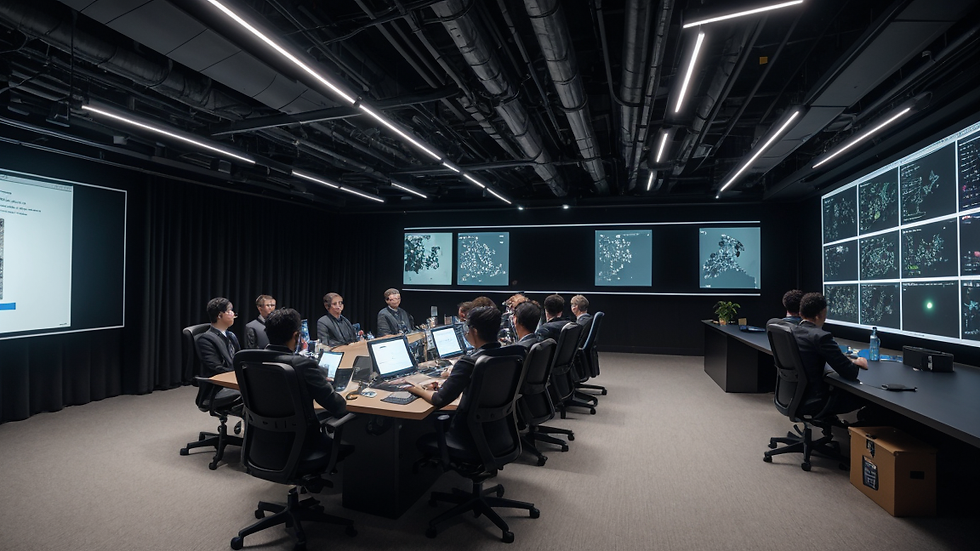
The real hurdle isn't the technology itself; it's integrating entirely new ways of thinking into existing teams. Humans are inherently pattern-recognition machines, but we're prone to cognitive biases – especially when presented with data that challenges our assumptions or confirms pre-existing anxieties about automation and AI. I've learned this the hard way.
When introducing AI tools for network observability within my DevOps teams:
I Didn't Start by Selling Magic: The initial reaction is often skepticism, even resistance. You can't blame them; it's a big change. Instead of diving straight into demos (which might feel like an ambush), I framed the discussion around shared goals: reducing incidents, improving predictability for our users, enhancing operational efficiency so engineers aren't sleep-deprived due to constant alerts.
Focus on Augmentation, Not Automation: This was crucial. It's not about replacing skilled network engineers with algorithms; it’s about giving them enhanced capabilities – superpowers if you will. AI helps filter, triage, and analyze data so fast that humans can't do it effectively without being overwhelmed or making mistakes due to bias.
Build Bridges, Don't Fortify Walls: I actively encouraged collaboration between network specialists (those who truly understand packet flows, hardware intricacies) and DevOps engineers. We structured cross-functional meetings where AI's potential impact on routing policies, security configurations, monitoring targets was discussed openly. This bridged understanding prevented the classic "siloed expertise" problem.
Embrace a Phased Rollout with Transparency: Start small, show clear ROI for specific use cases (like anomaly detection in core bandwidth). Explain what the AI isn't doing – it's not making independent decisions on critical actions without human review unless carefully designed and approved. This transparency builds trust.
Invest Heavily in Training & "How" Stories: Provide ongoing training, but equally important are real-world success stories ("war stories") from colleagues who've integrated these tools effectively.
The key was to ensure everyone felt part of the journey, not just a passenger being swept along by technological tides. We needed to understand that AI wasn't taking jobs; it was changing their nature – towards higher-level cognitive tasks enabled by data processing muscle. The human team provided context, creativity, and ethical oversight; the AI handled pattern recognition at scale.
Practical Steps for Implementation
Okay, theory is nice, but let's get grounded. Based on guiding several teams through this transition, here are some practical steps:
Start with Foundational Data: Ensure you have clean, accessible data sources (logs, metrics, configurations). Garbage in, garbage out applies even more intensely to AI systems.
Define Clear Objectives & Metrics: What specific problems do you want the AI to help solve? Examples: Reduce mean time to resolution (MTTR) by X%, predict network failures with Y accuracy, identify security anomalies related to Z types of traffic. This provides measurable targets and avoids scope creep focused solely on technical capability.
Choose Appropriate Use Cases: Prioritize tasks where human oversight is essential and AI can significantly augment performance. Examples: Anomaly detection in traffic flows (requires human interpretation), intelligent alert correlation (reduces noise), predictive failure analysis, automated log analysis for patterns, suggesting optimal network paths based on application needs.
Integrate into Existing Workflows: The AI shouldn't require engineers to learn an entirely new language or jump through hoops separate from their daily work. Embed its outputs directly within tools they already use (e.g., Prometheus panels showing flagged anomalies via AI suggestion, Grafana dashboards highlighting deviations).
Establish Robust Feedback Loops: This is vital! How does the team tell the AI system what it got right or wrong? Regularly review AI findings against actual outcomes and system understanding. Share anonymized "false positives" and "missed negatives" data back to the AI for retraining.
Prioritize Explainability & Transparency: Especially in networking, where low-level details matter. The AI's outputs – particularly its predictions or recommendations – must be explainable. Why did it flag this? How much confidence should we assign to that prediction?
Foster Continuous Learning & Adaptation: Infrastructure changes constantly. The AI model needs ongoing retraining and fine-tuning as the environment evolves, new threats emerge, and monitoring targets shift.
This isn't a weekend project; it's an evolution of your team's capabilities and processes. Approach it with clear goals, practical integration steps, and open communication channels about successes, failures, and lessons learned collectively.
Addressing Skepticism: Why Networking Teams Should Embrace AI Tools
I know the feeling. You're probably told, "Just use existing tools," or worse, "AI is overhyped." Let's tackle that head-on (pun intended).
"We can handle this ourselves": This often reflects pride in your team's expertise and capacity, which I respect immensely! However, consider the sheer volume of data generated by large-scale networks today. Manually sifting through petabytes isn't feasible for finding subtle correlations hidden within noise – that requires statistical horsepower, not just human diligence.
"It will replace our jobs": This is a common fear across many tech domains these days. But AI in network observation augments, it doesn't supplant. It takes over the tedious, time-consuming tasks of data correlation and initial anomaly detection – freeing your team to focus on complex problem-solving, strategic planning (like designing scalable architectures), risk assessment, and ensuring alignment with business goals.
"It might introduce new risks or security issues": This is a valid concern. AI systems can be vulnerable to adversarial attacks or data poisoning if trained improperly. However, the same vulnerabilities exist in any complex software system interacting with networks (including human operators). Robust development practices and security audits for AI components are part of responsible infrastructure management.
"The return on investment isn't guaranteed": ROI is tricky to measure upfront for these tools due to their potential impact across multiple areas. But look at the direct costs: engineer burnout, slow incident response impacting business continuity, reactive troubleshooting diverting resources from strategic projects – AI can mitigate many of these bottom-line concerns indirectly.
Embracing doesn't mean abdicating control or becoming dependent on a black box. It means supplementing your team's intelligence with machine-driven insights where appropriate and strategically leveraging the unique human cognitive abilities (abstract thinking, ethical decision-making) for higher-level tasks.
Looking Ahead: Preparing Your Infrastructure for a Brain-Enhanced Future
The integration of AI into DevOps and network management isn't just happening; it's accelerating. Models are becoming more accessible via cloud platforms or open-source frameworks like OpenAI APIs, making sophisticated analysis less daunting than before. The cost-effectiveness is improving with each passing year.
But what does this truly mean for our infrastructure? It means systems will become smarter, capable of adapting to changing conditions in near real-time – automatically rerouting traffic under unusual load patterns, proactively scaling resources based on predictive demand derived from application and network behaviour data. Imagine an AI that learns the typical communication patters between your microservices across different network zones – it can quickly identify when those patterns deviate, potentially signaling a distributed denial of service (DDoS) attack or internal misconfiguration without waiting for manual analysis.
The human role is evolving but remains critical: from technicians managing systems to strategists shaping intelligent infrastructure. We need to cultivate skills in data interpretation, collaborating with AI tools effectively, understanding model limitations and potential biases (especially concerning fairness in access/latency), communicating complex findings simply, and leading change initiatives that embrace new capabilities.
The Future is Synergistic: Prepare your teams now. Foster a culture of curiosity about new technologies, emphasize the importance of foundational data quality, promote cross-functional skill development, and be ready to guide them through integrating AI's analytical power with human ingenuity and ethical oversight.
Key Takeaways
Complexity Requires Collaboration: Large-scale systems demand blending human leadership (with its creativity and strategic thinking) and AI automation.
AI is an Augmentation Tool: It enhances, not replaces, the core value of skilled IT professionals. Focus on how it can free up your team's cognitive capacity.
Start with Clear Objectives & Data: Ensure you have measurable goals and foundational data quality to guide successful implementation.
Embrace Practical Use Cases: Begin by automating specific tasks where AI provides demonstrable value (e.g., anomaly detection, intelligent alerting).
Break Down Silos Deliberately: Encourage collaboration between networking experts and DevOps engineers for shared understanding.
Invest in Training & Transparency: Equip your team with knowledge about AI tools and ensure their outputs are understandable.
The 'Networked Brain' concept is fundamentally about empowering teams to manage complexity effectively through human-AI partnership.


Comments