
The Modern Castle Siege: Defending Against Ransomware's Enduring Threat
- Riya Patel

- Sep 7, 2025
- 11 min read
Ah, ransomware. Twelve simple letters, and yet a veritable dragon hoarding your digital kingdom. For over ten years now, I've navigated these troubled waters in IT security – witnessing firsthand how this insidious foe has evolved from a curious prank to an organized criminal enterprise targeting the weak points of our increasingly interconnected world.
While recent headlines often scream about headline-grabbing attacks or novel techniques (and yes, those grabbers are real!), beneath the surface lies a persistent, almost medieval threat: ransomware. It’s not just about malicious actors anymore; it's become a sophisticated tool for organized crime syndicates and even state-sponsored groups, promising ill-gotten gains in exchange for crippling data access.
This is our story today – a defence against a siege that adapts but never truly disappears.
The Changing Face of the Ransom: From Hobby Hackers to Cyber Cartels
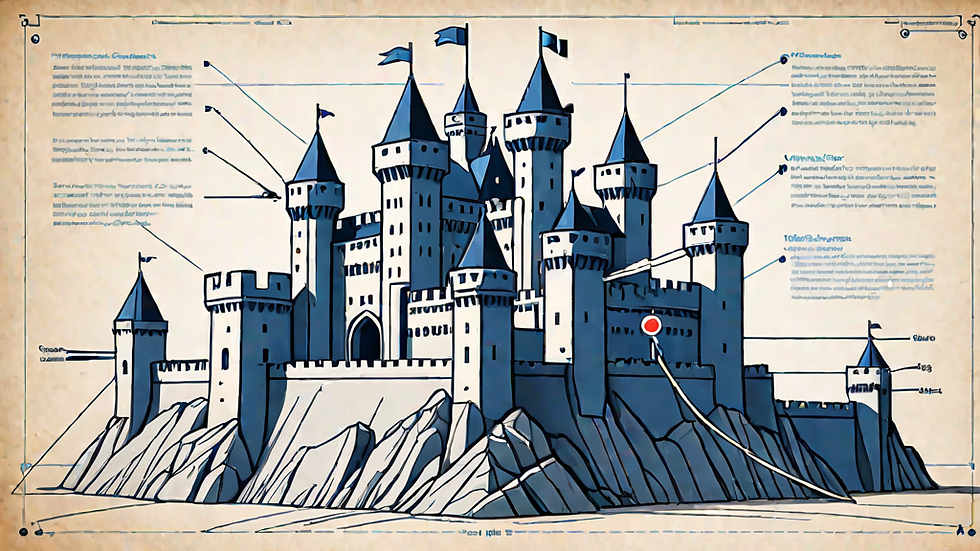
The landscape of ransomware has transformed dramatically over the last five years. Gone are the days when script kiddies found glory by encrypting a single user's home folder, perhaps demanding payment in Bitcoin for dramatic effect.
Today’s threat actors operate with chilling professionalism:
Sophistication: Modern ransomware isn't just about encryption keys; it often includes features like double extortion (stealing data and locking files), anti-debug capabilities to foil analysis, and even leak pages threatening to publish stolen data if victims don't pay.
Targeting: Attacks aren't random anymore. Groups meticulously research targets – looking for organizations with perceived high-value data (like healthcare records or intellectual property) or poor security hygiene. Ransomware-as-a-Service (RaaS) models allow even less skilled operators to launch sophisticated attacks by buying and using pre-built kits.
Infrastructure: They often utilize stable, resilient infrastructure, sometimes renting servers from compromised hosting providers ("dark drops") to ensure availability even if their primary server is taken down. Command-and-control (C2) communication has become more stealthy.
It’s like comparing a Roman gladiator with a modern special forces unit – the intent remains the same, but the execution, resources, and stakes have escalated enormously. The profits are significant too. Industry reports suggest ransomware payments grew to over $1 billion USD in 2023 alone, demonstrating its profitability as an illicit business.
The Persistent Problem: Why Ransomware Doesn't Go Away (Yet?)

Despite the valiant efforts of security professionals worldwide, ransomware remains stubbornly effective. Why? Several key factors contribute to this resilience:
The Fear Factor: Organizations universally fear downtime and data loss.
Lack of Preparedness: Many still lack robust detection, prevention, or recovery strategies beyond a single backup copy – a flawed defence easily bypassed by modern, stealthy variants.
Target-Rich Environment: As digital transformation accelerates, more targets with valuable data (and often weaker security) emerge. Think cloud misconfigurations, unpatched remote access tools, and supply chain vulnerabilities exploited via software updates.
This isn't a technical issue solvable solely by point products; it's an operational challenge requiring discipline, vigilance, and resilience across the entire IT lifecycle – from infrastructure setup to user training. It requires treating data protection not as a castle-town afterthought, but as the very moat surrounding your digital citadel.
Detection: Spotting the Dragon Before He Burns Your Shacks

Modern ransomware is masters of disguise. They don't strike with brute force; they creep in like shadowy thieves at midnight – often exploiting known vulnerabilities that haven't been patched yet or using legitimate credentials obtained through phishing, social engineering, or malware previously dropped on the network.
Detection isn't just about looking for encryption events (though those are important). It’s about identifying anomalous behaviour indicative of a compromise:
Signs to Look For
Unusual Network Activity: This could be communication with unfamiliar C2 servers or data exfiltration patterns. Think "out of bandwidth" incidents – legitimate users might exceed limits, but encrypted files being copied out for double extortion are another matter entirely.
Endpoint Behaviour Changes: Monitoring file system changes (especially unusual encryption attempts), registry modifications related to persistence, and elevated processes running at odd times is crucial. Tools like EDR/Micro-segmentation can help here, but vigilance from security analysts remains key.
Decryption Attempts: Modern systems often have built-in mechanisms for decrypting files upon waking or logging in (like BitLocker or FileVault). If an attacker uses a master key to encrypt the entire system volume before these mechanisms trigger, they can prevent decryption attempts during the initial compromise. Look for signs of sophisticated persistence.
Let's not forget the human element in detection too – users reporting strange file names appearing overnight ("[encrypted]_file.txt"), unfamiliar pop-ups, or email addresses like "CEO@Urgent.Need.Bankruptcy.Claims.docx" are often early warning signs that automated systems might miss. But they require a security-aware populace to spot and report.
The Role of EDR (Endpoint Detection and Response)
EDR solutions have become invaluable in this fight. Think of them as the watchful guards patrolling the castle walls, equipped with torches that detect movement – but not just static alerts anymore. Modern platforms offer behavioural analysis, threat intelligence correlation, and often include features to help prevent lateral movement or identify specific ransomware families.
However, EDR isn't magic. It requires skilled operators to understand the data, triage effectively, and connect incidents across different systems and technologies. A good platform provides visibility, but you still need someone sharp enough to spot the dragon's hoard moving without setting off every alarm in the vicinity of the keep.
Coverage: Layers Upon Layers of Protection
Defence against ransomware requires a multi-layered approach – no single wall can stop a determined attacker from infiltrating your stronghold. It’s like reinforcing a medieval castle with concentric walls, watchtowers, moats, and traps:
The Cornerstone: Robust Backups
This is the non-negotiable foundation of modern ransomware defence. Why? Because if you pay the ransom (which isn't guaranteed to work anyway) or decrypt files using potentially compromised keys provided by the attacker after infection – a common trick with trojans masquerading as decryptors – your backup should restore operations.
But "robust backups" aren't just about taking copies. They require:
Frequency: Regular snapshots and transaction log backups for databases.
Isolation: Backups must not be on the same network segment or file system as primary data, ideally air-gapped (physically separate). Don't let ransomware encrypt your backup as well!
Testing: Crucially, you need to test your backups periodically (restoring a non-critical system from them) to ensure they are viable and can be used effectively in an emergency.
Immutable Storage: For critical data like transaction logs or frequently changed files, consider using immutable storage for backup copies to prevent attackers from tampering with the backups themselves.
A single compromised machine shouldn't cripple your entire operation if you have truly robust, tested backups. Think of it as having a loyal retinue ready to rebuild the castle even after its worst assault.
The Moat: Network Segmentation and Micro-segmentation
Controlling access is paramount. If ransomware gets in one door, how many doors does it have to move freely throughout your network? Segmenting networks limits this movement significantly.
Broadly:
Demilitarized Zone (DMZ): Isolate public-facing servers from the internal corporate network.
VLANs: Group like-minded devices together – finance systems in one VLAN, HR databases in another, user workstations in a third. This keeps malware outbreaks contained.
More modern and effective: Micro-segmentation using technologies like NSX-T or Azure Network Policies. Think of it as drawing virtual walls within your existing network architecture.
Principle: Apply the principle of least privilege at the IP address level.
Example: Database servers should only allow connections from specific application servers, not directly from user workstations.
Benefit: This drastically limits an attacker's ability to move laterally once they breach a system. It’s like turning your open courtyard into discrete, secure courtyards.
The Walls: Endpoint Security and Application Control
Your endpoints (servers, laptops, desktops) are the gatehouses of the castle. They must be well-defended:
EDR/MX vs Traditional AV: While traditional Antivirus (AV) is still part of the equation (much like archers defending a gate), it's woefully inadequate against sophisticated threats hidden in JavaScript or disguised as legitimate processes. EDR platforms offer deeper behavioural analysis and threat hunting capabilities, often integrated with security information and event management (SIEM). Next-Generation Firewalls also provide endpoint detection features.
Application Control: Prevent unauthorized software from running on critical systems. This is like controlling access to the armoury or weapon workshops – only approved tools can function.
The Gates: Secure Remote Access
Remote access tools are often the prime entry point for ransomware, exploited via phishing emails (like fake VPN login prompts) or compromised accounts within legitimate remote access frameworks (VPNs, RDP).
VPNs: While convenient, they connect entire networks. A single breach can expose everything behind them.
RDP: Remote Desktop Protocol is powerful but dangerous if not managed carefully.
Think of secure remote access as a heavily guarded gate:
Least Privilege: Grant users the minimum necessary permissions to perform their tasks remotely or otherwise.
Multi-Factor Authentication (MFA): Absolutely essential for any account, especially privileged ones. Even if an attacker steals a password via phishing, MFA adds another critical hurdle using biometrics, hardware tokens, or soft authenticators.
NAT/Proxy: Consider routing VPN traffic through a web proxy on the internal network side first (like FortiGate setups) to add isolation layers before it even touches your systems. This is like having guards check credentials and IDs before they reach the gatehouse itself.
The Watchtowers: Security Monitoring
Continuous monitoring of both network traffic and system logs provides vital early warnings:
SIEM Systems: Platforms like Splunk, IBM QRadar, or Sumologic aggregate logs from various sources (firewalls, servers, endpoints) and look for patterns indicating malicious activity.
CloudWatch/CloudTrail: Crucial if you're operating heavily in the cloud. AWS CloudWatch and Azure Monitor can provide deep visibility into operational activities.
The People: Training and Awareness
Technology is only part of the defence; people are often the weakest link or, conversely, the strongest asset:
Phishing Simulations: Regularly test your users with simulated phishing emails mimicking real-world threats (e.g., fake login pages for VPN/RDP). Track engagement rates. Ensure they understand these aren't training exercises but realistic scenarios.
Social Engineering Training: Teach users to question requests, especially those involving data sharing or system changes.
The Aftermath: Incident Response and Recovery
Even with the best preventative measures ("defences"), no castle is entirely foolproof against a determined siege. Ransomware incidents will inevitably occur despite robust security practices – perhaps due to a zero-day vulnerability or an unknown threat vector bypassing controls momentarily.
This brings us to Incident Response. It's not just about reacting; it's about being prepared and knowing the steps:
The Incident Response Plan (IRP)
A well-documented IRP is essential, regardless of your industry. Think of it as a battle plan for defenders – clear roles, communication channels, and defined actions.
Preparation: This includes backups, tools, training.
Identification: Recognizing the breach or attack pattern (like seeing enemy banners). Crucial to have correlation logic in place so you can recognize attacks that might not perfectly fit known signatures.
Containment: Isolating affected systems before they spread further. This requires speed and clear understanding of network topology – knowing what switches, firewalls, or VLANs need blocking immediately.
Eradication: Removing the malware itself (identifying the C2 server IPs/URLs to block them). Requires deep technical expertise; sometimes involving reverse engineering malicious components or using specific decryption tools if available and safe.
The Recovery Path
This is where robust backups truly shine, but it's more complex than just restoring files:
Business Continuity: Can systems other than the primary ones handle basic user requests (like accessing public websites)? If yes, continue operations.
Data Restoration: Restore data from verified backups. Remember, you need clean copies that haven't been exposed or compromised during the attack.
Investigation: Conduct a thorough post-mortem – how did it happen? What specific vulnerabilities were exploited? Was there inadequate monitoring?
Remediation: Patch vulnerable systems immediately. Update security configurations based on lessons learned.
The Double-Extortion Dilemma
Many modern ransomware variants employ double extortion, meaning they steal data before encrypting files – or during a process that doesn't trigger immediate decryption attempts by EDR tools if the encryption is done beforehand.
Challenge: If you suspect your backups are compromised (perhaps because of suspicious network traffic leading them to believe someone inside initiated an attack), paying the ransom might not be safe.
Option: Restore from older, clean backup copies and scrub any sensitive data manually after the threat has been neutralized.
This requires meticulous tracking of restore points across all backup systems – a discipline rarely matched in reactive situations. It’s like knowing exactly which barrels of gunpowder to dig up after an attack because you meticulously logged every change during peacetime operations, including software updates and configuration changes.
The Unseen Threat: Supply Chain Attacks
Organizations often rely on third-party software for critical functions – from billing systems to communication platforms. This reliance creates a new vector for ransomware: the supply chain.
Think of it like this: if all your bakeries (applications) use flour (software components) sourced from one supplier, and that supplier's delivery system is compromised, then potentially every bakery could be affected unless they have robust internal security or separate backups.
How Supply Chain Attacks Work
An attacker compromises software used by many organizations. Examples include:
Malicious Updates: Legitimate software vendors (or attackers pretending to be them) push malicious updates.
Software Update Mechanisms: Attackers compromise the update server, pushing malware under the guise of necessary patches.
Mitigation Strategies
Combating supply chain threats requires vigilance beyond your own walls:
Vet Your Vendors: Don't just trust "official" channels; understand how software is delivered and updated.
Patch Promptly & Consistently: Ensure you are applying updates from the legitimate source, not a third party or potentially compromised channel.
Secure Software Repositories: Treat your internal code repositories as critical infrastructure – enforce access controls, monitor for unusual activity, and consider signing code if feasible.
What About Cloud Providers?
While reputable cloud providers have strong security measures, misconfigurations (like overly permissive IAM roles) can still allow attackers to move laterally within the cloud environment across multiple tenants or virtual machines. Remember the principle of least privilege applies even within your own cloud kingdom!
The Future Siege: AI-Powered Defences and Offensives?
The next frontier in cybersecurity involves artificial intelligence (AI). Attackers are exploring ways to use generative AI models like ChatGPT or GPT-4, fine-tuned on specific targets' data, to create highly personalized phishing campaigns ("Deepfake Phishing") that bypass traditional detection.
Attack Side: Imagine an AI trained on your employee's communication patterns sending a perfectly crafted email mimicking their boss, asking for urgent access credentials – far harder to spot than generic threats.
Defence Side: Security teams are leveraging AI and machine learning (ML) for enhanced threat detection:
Automated Analysis: Using ML algorithms to analyze vast amounts of network data and identify subtle anomalies indicative of a sophisticated attack, faster than human analysts reviewing logs line by line.
Threat Hunting Platforms: Tools incorporating AI/ML capabilities that help defenders proactively search their environment for signs of compromise.
It's an arms race with increasing stakes. But the core tenets – robust backups, network segmentation, endpoint hardening, and continuous monitoring combined with human vigilance – remain unchanged. Technology enhances our defences, but it is still guided by decades of established security principles.
Conclusion: Building Your Digital Bastion
Ransomware isn't going away any time soon; in fact, its evolution suggests a more persistent threat than ever before. It requires the mindset and resources of organized crime to be truly effective – hence our focus on robust operational defence rather than just technical point solutions.
Building resilience means:
Layering Defences: No single wall stops all attackers.
Thinking Like an Assaulter: Understanding potential weak points (unpatched systems, phishing emails, poor remote access controls) and proactively securing them is crucial. This involves understanding your own environment deeply – its strengths, weaknesses, and the specific threats targeting it.
Constant Vigilance: Cybersecurity isn't a one-time build; it's an ongoing process of patching, monitoring, testing, and training.
It’s like fortifying a digital castle for the modern age. The walls might be firewalls and EDR systems, the moat is network segmentation, but without watchful guards (trained personnel) and loyal retainers (robust backups), even the most impressive defence can fall to a determined siege leader armed with knowledge of its vulnerabilities.
So, let's raise our digital battlements higher. Let’s implement robust defences based on established principles – least privilege access, network segmentation, strong MFA, vigilant monitoring, and truly immutable backups. And above all, let’s remember the human element: train your people to be alert sentinels around those gates.
The dragon (ransomware) adapts; it evolves its tactics with each campaign season. But a well-prepared kingdom – one that understands the threat context, implements defence layers diligently, and tests recovery plans rigorously – can withstand even the fiercest onslaught.
This is our ongoing battle against ransomware's persistent siege: adapt or perish in the digital realm.


Comments