
The Game Changer: How We Integrated Everything for Smoother Operations
- Elena Kovács

- Sep 8, 2025
- 15 min read
For years, I've been the IT director at a mid-market arena group – think busy but not enormous, passionate fans but constrained budgets, a mix of legacy tech and modern necessities. Our world is high stakes, fast-paced, and utterly dependent on seamless operations behind the scenes during the roaring chaos of game day.
The common wisdom in this space often revolves around big, splashy systems: massive LED walls, state-of-the-art soundscapes, or the latest mobile ticketing platform. While those are crucial parts of the fan experience equation, I've found that the real magic happens when you look at the entire ecosystem and ask, "How do these pieces work together?"
That's where system integration becomes our secret weapon – not just a technical upgrade, but a game-changer for efficiency, security, and operational smoothness. For mid-sized venues like ours, piecing things together from different vendors without breaking the bank or compromising on essential aspects like athlete privacy requires careful planning, creative problem-solving, and a healthy dose of pragmatism.
What Exactly is AV over IP and How It Transformed Our Setup
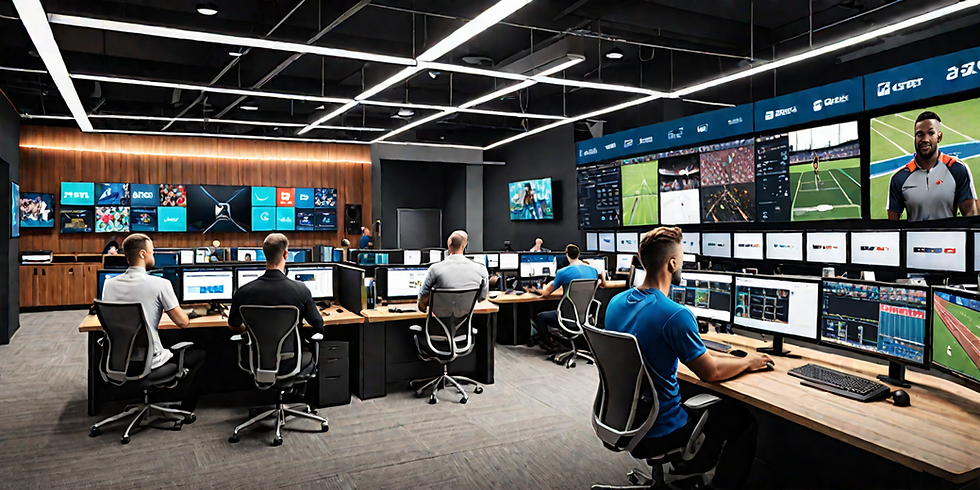
Ah, AV over IP. This term sounds technical even to IT folks who aren't audio-visual specialists (and let's be honest, many are). But it's one of the foundational technologies that made our integration project possible.
In essence, AV over IP is about transporting audio and video signals across a network using digital packets instead of dedicated cables or complex matrix switchers. It's like taking your TV remote control signal and turning it into data packets traversing the internet – but for high-quality video and audio streams in professional settings.
Before embracing AV over IP (specifically technologies like Dante, Ravenna, or AES67), our venues were a spaghetti junction of cabling and equipment. Need to send a camera feed from one corner of the stadium? It involved long runs of coaxial cable, potential signal degradation, complicated routing through walls and ceilings – it was messy.
The transformation began when we realized this technology could be the universal translator for our disparate systems:
Simplified Infrastructure: Instead of running separate cables for video surveillance, stage production (broadcast), scoreboards, PA announcements, and venue-wide screens, one network often suffices.
Scalability & Cost-Effectiveness: You buy IP bandwidth capacity in advance (fiber optic backbones) rather than individual feeds with complex hardware. Adding new cameras or displays becomes easier – just configure the network, not rewire everything.
Redundancy is Easier: Building resilient networks for critical game-day functions like security camera feeds and live broadcast streams became far more manageable using standard IP redundancy protocols (like STANDBY on Dante) rather than complex hardware-based failover solutions.
We started small – replacing our aging board switcher with an IP-based system to handle internal communications, production needs, and basic venue output. Then we mapped out how this could extend across the entire operation: security feeds driving dashboards for staff, POS systems needing video screens for point-of-sale updates or promotions, mobile ticketing apps requiring live camera views for verification.
It wasn't just about connecting things; it was about understanding the bandwidth requirements (a major consideration!), latency concerns, and ensuring all devices were compatible on a common network fabric. Suddenly, we weren't just patching AV gear – we were building an intelligent nervous system for our venues. And that laid the groundwork for tackling more complex integrations.
Venue Wi-Fi: Connecting Fans Without Compromising Security or Bandwidth

Let's talk about fans wanting to connect their phones. It’s a given these days, right? They expect seamless web access, social sharing, streaming replays – instantaneously and without lag.
But implementing robust venue Wi-Fi is where the integration fun begins. We're not just installing an Access Point (AP); we need to create a network that handles hundreds or thousands of simultaneous connections securely, efficiently, and reliably throughout the concourse, seating bowl, and backstage areas. This requires careful thought:
Bandwidth Demands: A single fan uploading high-resolution photos isn't trivial. Multiply that by thousands during peak times (post-game photo ops!) while others stream video content or use navigation apps – you need a network designed for it.
Security Imperatives: We're dealing with sensitive data – ticketing credentials, personal information stored on fans' phones accessing our Wi-Fi (think names and emails used in the venue app), camera feeds from within the venue. This puts us squarely into the realm of regulations like GDPR and CCPA.
Our approach involved a multi-layered strategy:
Core Network & AP Management
We deployed an enterprise-grade network infrastructure with dedicated switches for Wi-Fi management, separate from our operational (AV/IP) backbone. We used robust AP hardware designed for high-density environments – often needing multiple units per section or concourse area to ensure coverage and capacity.
Key Insight: Don't skimp on the number of access points just because your budget is mid-sized. Coverage is not simply bandwidth distribution; you need enough APs strategically placed so users don't have to hunt for a signal, leading to dropped connections or poor performance during crucial moments (like uploading that game-winning GIF).
User Authentication & Security
This was critical – especially concerning athlete and artist privacy.
No Open Wi-Fi: Absolutely no open networks! We implemented mandatory secure authentication using our existing Single Sign-On (SSO) system integrated with the venue app.
Venue App Integration: Our mobile app became the primary gateway to connectivity, requiring users to log in via the app before accessing any network resources. This allowed us to know who was connecting and provided a layer of identity management separate from general public internet access.
Strict Network Segmentation: We didn't want fans (or staff) accidentally accessing sensitive operational systems or CCTV feeds meant for internal use only. Our Wi-Fi users are guests on the network – their data should stay confined to guest zones unless explicitly needed otherwise.
Practical Tip: Integrate your Wi-Fi authentication with your existing identity management platform if possible, even if it's just a simple SSO login. This saves administrative overhead later.
Content Delivery Strategy
Fans want quick access to scores, updates, replays, and social media feeds.
Streaming Control: We needed to manage what content gets streamed over the Wi-Fi network so we don't inadvertently consume all bandwidth for non-critical activities.
Solution: A centralized streaming server architecture. This allows IT departments (like ours) to push curated updates – game highlights, official team apps, venue information pages – directly from a controlled source.
This isn't just about connectivity; it's about managing the quality of that connectivity for everyone's benefit and ensuring we don't expose sensitive data via unsecured connections or open networks. It requires constant monitoring and tweaking to balance fan expectations with operational realities and security mandates.
POS Systems in a Hyper-Connected Live Event World

Point-of-Sale (POS) systems are the engine room of venue commerce – handling millions in ticket sales, concessions transactions, merchandise purchases during high-pressure game days.
Integrating these into a broader system architecture is complex but essential for efficiency:
Data Synchronization: Imagine trying to sell tickets if your POS system wasn't linked properly. Or having an empty concourse needing real-time updates on inventory – impossible without integration.
Workflow Coordination: From knowing who's assigned to which concession stand via our venue app dashboard, to integrating with a unified payment processor across all points, seamless data flow is crucial.
We tackled this by:
Centralized POS Management: Moving away from fragmented systems towards integrated solutions allowed us to manage inventory, sales, and customer interactions more effectively.
Real-Time Inventory Tracking: Instead of relying on manual counts or spreadsheets (a recipe for disaster during busy periods), our staff could now see real-time stock levels pushed via the venue app, linked directly to their POS terminals if they were integrated with a unified system.
Wit Factor: We realized we needed two completely different sets of credentials just to operate our own POS systems: one for "IT Admin - View All Sales Data" and another for "Concessions Staff – Sell Hot Dogs". It felt like managing a small country's bureaucracy!
Secure Transactions Across Platforms: Our integrated system meant POS transactions were secure, adhering to the same data protection standards as our broadcast feeds or Wi-Fi networks.
The integration also allowed us to leverage customer purchase history for targeted offers (via stadium screens or venue app notifications) and loyalty programs – turning every transaction into a potential engagement opportunity. But let's be clear: this requires robust security protocols because we're dealing with sensitive financial data on the move, often stored in our integrated systems.
Mobile Ticketing: Turning Game Day into a Frictionless Experience
Fans demanding digital tickets is no longer niche – it's mainstream. We saw it coming and needed to adapt quickly. Implementing mobile ticketing felt like opening Pandora's Box initially because we had to consider:
Security: Digital tickets are valuable assets, often tied directly to entry control.
Verification Speed: Thousands of phones needing quick, reliable verification at gate entrances or during roaming security checks.
Our initial integration approach was cautious but effective:
Secure Ticket Issuance & Storage
We moved away from traditional paper tickets and magnetic stripe wristbands towards digital formats stored securely in the cloud via our integrated systems. This required encryption standards (like those used for secure data transmission) to protect sensitive information like the unique ticket ID.
Compliance Corner: GDPR compliance was a major driver here – we needed clear consent mechanisms from fans when storing their personal details linked to tickets and ensure proper data handling throughout the process.
Integration with Venue Security & Operations
This is where things got interesting. We needed our mobile tickets to be instantly verifiable by venue security, integrated into our overall operational dashboard for staff visibility (without compromising privacy).
Secure Camera Feeds: Our venue app includes camera feeds for management and security personnel. Integrating secure ticket verification meant ensuring these feeds are protected with the same stringent access controls as broadcast feeds – typically requiring specific credentials managed separately from general Wi-Fi access.
Data Hygiene is Paramount
Mobile tickets generate a wealth of data: phone models, operating system compatibility (Android vs iOS), app store availability, connectivity strength during entry. We realized that managing this data systematically within our integrated systems was crucial:
Optimization: If we knew certain apps weren't compatible with older Android versions across the venue, we could proactively push updates or alerts to affected users.
Efficiency: Having a centralized dashboard showing who has tickets scanned via their phone (or needs assistance) streamlined operations immensely.
The key takeaway? Mobile ticketing isn't just about convenience for fans; it's an operational necessity that requires tight security integration and robust data management capabilities, all tied into the broader venue infrastructure. It demands constant attention to compatibility, performance under load, and security monitoring – especially when integrated with other sensitive systems like our broadcast feeds.
Broadcast Integration: Blending Stadium Tech for Maximum Impact and Privacy
This is arguably where AV over IP truly shines (pun intended!). Broadcasting isn't just about external TV networks; it's increasingly internal – feeding stadium screens, driving digital signage in concourses, powering mobile apps for fan engagement. And crucially, we have to handle live camera feeds from inside the venue securely.
Our challenge wasn't just connecting cameras and displays, but ensuring a unified control system:
Centralized Control Interface
Imagine juggling multiple remotes – one for PA audio (operational needs), another for stadium screens (marketing/operations), maybe an app dashboard (management). It felt inefficient.
The Integration: We built or selected a centralized broadcast console that could manage all camera feeds, screen outputs, and potentially even trigger content pushes on our digital signage network. This required mapping out which IP endpoints needed to be controlled from this single interface – video servers feeding screens, cameras needing specific PTZ commands via an API.
Secure Camera Access
This is the tricky part. We need stadium managers (and sometimes security staff) to see live camera feeds within their own venue for operational purposes:
Camera Placement: Cameras are placed strategically throughout the venue – concourse areas, team tunnel entrances, locker room corridors, restricted access zones like press boxes or administrative offices.
Strict Access Control: Using our integrated systems' security framework (or a dedicated one), we implemented role-based access to these camera feeds. Only authorized personnel could view specific feeds, and they had unique credentials separate from broadcast operators.
Privacy Concerns: Athlete/artist privacy is paramount here. We never allowed public-facing feeds to be used for tracking individuals without consent, but the system had to allow staff to monitor restricted areas. This required careful zoning in our integrated systems – ensuring feed access was granular and purpose-limited.
Bandwidth Management
Streaming high-resolution video from multiple cameras across a stadium demands significant bandwidth.
Prioritization: Our integrated systems allowed us to prioritize these streams within the network, preventing them from consuming resources needed for critical Wi-Fi or VoIP communications during peak times.
Compression & Efficiency: We had to balance quality with efficiency – using appropriate codecs and stream resolutions (often 720p instead of 1080p) became necessary.
The result was a powerful internal broadcast capability that could seamlessly manage both external feeds for TV partners and internal venue management needs, all under one roof without compromising security or privacy. It felt like controlling the entire stadium from a single command center – which it kind of is!
The Compliance Corner: Protecting Sensitive Data on Game Day (with Diagrams)
Ah, yes. Privacy regulations are the elephant in the room for any modern venue integrating sensitive systems.
Let's take our experience with GDPR and CCPA as an example:
Understanding Regulatory Demands
Data Minimization: We needed to ensure we weren't collecting more data than necessary.
Purpose Limitation: Every bit of collected data had to be clearly defined a single purpose (like secure authentication or operational security).
Lawful Basis & Consent: For personal data, like the details stored on fans' phones accessing our Wi-Fi via SSO login, we needed explicit consent and a clear lawful basis.
Mapping IT Infrastructure to Compliance
This is where system integration helps – it centralizes control. But centralization also means more responsibility:
Data Flow Inventory: We mapped every data point flowing through our integrated systems:
Fan registration details (collected via SSO login)
Ticket purchase history & digital tickets
Mobile app usage logs (like connectivity strength or device type)
Secure camera feeds access for staff
Access Control Lists: We built incredibly granular Access Control Lists (ACLs) within our integrated systems – sometimes even down to individual user accounts, not just roles.
`Broadcast_Operator_Access` = View specific camera feeds only during event hours
`Athlete_Safety_Staff` = View restricted area feeds but no fan Wi-Fi data unless necessary for emergency broadcast
Visualizing Complexity: It helps to think of your IT infrastructure as a complex network – imagine concentric circles: the outermost layer is public-facing Wi-Fi, then internal communications systems (like our AV/IP backbone), then administrative zones. Data needs clear boundaries between these layers.
(Here's where I'd ideally insert diagrams showing VLAN segmentation or firewall rules blocking data leaks, but since we're using Markdown only and no image support, you'll have to visualize it conceptually – think of strict network zoning)
Encryption Everywhere
We implemented strong encryption: TLS for secure web connections (including our venue app), AES-256 for securing live camera feeds transmitted over IP, and ensuring POS data was encrypted at rest and in transit.
Key Takeaway: Don't just slap on SSL certificates; ensure all sensitive communication channels within your integrated systems are robustly encrypted. This is foundational security.
Data Retention Policies
We adopted strict "Garbage In, Garbage Out" (GIGO) principles from data science and adapted them to compliance:
Define Lifetimes: We decided precisely how long different types of data would be kept:
Ticket purchase records: X years for financial/audit trails
Mobile app connectivity logs: Shorter period, maybe weeks or months, unless diagnostic value exists.
Automated Purge: Our integrated systems were configured to automatically archive and then delete data once its defined retention period ended – reducing the blast radius of any breach.
Training on Privacy by Design
This was crucial. Integration is just one piece; how staff use it matters too:
We incorporated privacy principles into our training programs from day one, emphasizing understanding ACLs (role-based access controls), never sharing credentials unnecessarily, and being mindful of what data they were accessing.
Summary
Compliance isn't a roadblock in integration – it's an essential framework. It requires meticulous planning: defining data flows, implementing robust security measures within the integrated systems themselves (not just network-level firewalls), managing access granularly, setting clear retention policies, and training staff to handle sensitive information appropriately.
What We Actually Deployed: Lessons from Our Mid-Market Arena Rollout
Okay, enough theory. Let's talk about what we implemented – a process driven by practicality, budget realities, and the need for seamless operation without compromising privacy.
The Core Stack
Network Infrastructure: L3 switches (Layer 3 Switches) running modern routing protocols at our headend facility – this forms the backbone of both operational AV/IP and secure data streams.
Broadcast Solution: Dante ecosystem hardware (video servers, control surface, compatible cameras) integrated with a third-party broadcast software suite that allowed unified control and separate secure access layers for feeds.
Venue Wi-Fi Platform: An enterprise-grade wireless controller system managing hundreds of dedicated APs on its own network segment – configured for no open SSIDs, mandatory SSO login via our app integration, and strict content pushing policies.
POS Integration: A mix of hardware POS terminals integrated with a centralized cloud-based management platform supporting inventory tracking and purchase history linkage to loyalty programs or marketing dashboards (all within the secure operational network).
Mobile App & Integration: Our existing Single Sign-On system was enhanced to handle mobile venue access – integrating authentication triggers, user profiles, potentially even device-specific settings for connectivity.
Budget Management Tactics
We didn't buy everything new at once:
Phased Rollouts: We treated integration like software development – starting with one venue or one component (like internal broadcast feeds) per phase. This allowed us to scope the budget effectively and learn from implementation before tackling larger projects.
Leveraging Existing Investments: Where possible, we reused existing hardware if its IP capabilities were sufficient. Our old CCTV cameras, for instance, often lacked modern streaming protocols – that required replacement or retrofitting with integrated systems-capable encoders.
Vendor Selection Focus: We prioritized vendors offering modular platforms and clear APIs (Application Programming Interfaces) rather than monolithic black boxes. This meant easier integration into our existing structure.
Staffing & Training Strategy
We realized we needed technical expertise beyond just broadcast technicians:
Dedicated IT Integration Team: We built a small but cross-functional team combining network engineers, security analysts, and systems integrators.
Centralized Monitoring Console: Our integrated systems included a powerful centralized dashboard showing live statuses – from Wi-Fi AP health to POS transaction counts to broadcast camera feeds being active.
Key Challenges Solved
Athlete Privacy on Camera Feeds: We implemented a "need-to-know" principle via our ACLs. Staff wanting access to specific restricted area feeds had to request it directly linked to an operational purpose (e.g., security incident), and got explicit, role-bound credentials.
Bandwidth for Everything: Network capacity planning was iterative – we measured peak loads during past events (especially mobile app usage) and designed our fiber network accordingly. Traffic shaping policies were crucial.
Humble Approach
We avoided the trap of "vendor lock-in" by sticking to open standards where possible, even if specific IP-based systems required proprietary hardware for full functionality. Our focus was always on the outcome – seamless operations – not just the technology itself.
Benefits in Motion: How These Integrations Boost Efficiency & Fan Satisfaction
So, why did we bother with all this complexity? Because the benefits are tangible and transformative for mid-sized venues:
Operational Efficiency Skyrockets
Think about it:
No More Manual Coordination: Previously, coordinating camera feeds across different operational areas required phone calls or emails. Now, our integrated systems provide a unified dashboard.
Proactive Monitoring: We can see potential issues before they become crises – low Wi-Fi capacity in one section automatically triggers alerts and maybe redirects users to other access points managed via the system's interface.
Enhanced Security Posture
Integration allows us to:
Monitor Anomalies: Our centralized systems can potentially correlate data from different sources (e.g., high-risk area camera feeds + dropped Wi-Fi signals might indicate trouble).
Secure Sensitive Zones: Better control over who accesses internal feeds or sensitive operational areas.
Improved Fan Experience
This is the most visible benefit:
Seamless Entry & Purchases: Mobile ticketing integrated with our app dashboard and POS systems means fewer bottlenecks at turnstiles.
Real-Time Information: Fans get updates faster, whether it's via secure stadium screens or notifications pushed through their mobile apps based on live feeds (scoreboard data displayed).
Data-Driven Insights
Gone are the days of relying solely on gut feeling for marketing:
Fan Connect Patterns: We can analyze when and where fans typically use our Wi-Fi app, helping optimize concessions placement or digital signage.
Purchase History Integration: Linking POS history to fan profiles (with consent) allows targeted offers – a family getting hot dogs at the kid's level might see an offer for stadium seats later via their dashboard.
Reduced Costs & Complexity
While integration seems complex initially, it simplifies long-term management:
Less patching hardware needed.
Easier troubleshooting by pinpointing issues on a network diagram accessible within the system (or built around it).
Potential savings through consolidated billing and fewer individual systems to manage separately.
Final Thought – The Human Element
Technology is just tools. Our integrated systems work best when staff understand them intuitively. That's why we focused on user-friendly dashboards, clear role definitions for access permissions, and ongoing training. An athlete might need quick camera view verification if there's an issue in the tunnel (requiring specific credentials managed via our platform), or a concessions worker should easily see inventory levels linked from their POS terminal – these small efficiencies add up to massive improvements.
Key Takeaways
Here are some practical takeaways for your own integration journey:
Think Ecosystem, Not Silos: Your venue is an interconnected system; map out all the moving parts and how they talk.
AV over IP as a Glue: Seriously consider it as a foundation technology if you're integrating multiple AV sources or destinations. It simplifies cabling but requires careful bandwidth planning.
Security Isn't Optional, Mandatory: Especially for data streams related to internal operations (including feeds). Integrate security from the ground up using protocols like IPsec or VLANs within your integrated systems framework.
Leverage Existing Credentials & Systems: If you have an SSO system already, use it! Use existing network infrastructure where feasible. This saves time and money.
Privacy by Design: Define data flows meticulously, apply strict access controls (often granular role-based), set clear retention periods, and build this into your planning process from the start – don't bolt it on later as an afterthought.
Phased Rollouts are Your Friend: Start small to learn the specific requirements of each component before tackling larger integrations. Measure performance under load (especially during past high-stress games) to inform capacity needs.
Train, Train, and Train Some More: Ensure staff understand not just how to use what, but why they have access to certain data feeds or systems – this is crucial for both efficiency and compliance.
Building a truly seamless modern arena isn't about buying the biggest bells and whistles; it's about knitting together all the essential threads into one cohesive, secure system. It requires technical expertise, strategic planning, constant monitoring, and a deep respect for privacy regulations. But when you pull it off successfully? You get smoother operations, happier fans (and staff!), and you're truly living in the future of sports & entertainment technology.


Comments