
Arena IT Director Reveals: How Integrated Systems Transformed Our Game-Day Operations
- Elena Kovács

- Aug 23, 2025
- 8 min read
Ah, the life of an arena IT director! It's a role where you're constantly bailing, metaphorically speaking, on systems set up by previous generations who thought 'good enough' was sufficient. Let me tell you, our mid-sized arena group is no stranger to operational hurdles – from legacy POS nightmares to broadcast feeds that look like they were assembled in the Stone Age (and sometimes still are!). But we're not just about reacting; we actively build and refine.
Our core mission? To create seamless, engaging game-day experiences for fans while ensuring smooth operations. This meant breaking down silos between departments – our tech team, sales folks, security personnel, event managers, floor staff – they were essentially living in different countries before the digital age arrived forcefully at our doorstep. The key realization: integrated systems aren't just a technical upgrade; they're the bedrock of modern live-event management.
Operational Overhaul in a Mid-Market Arena: Setting the Scene

Our arena sits comfortably between corporate behemoths and tiny local venues. That means we handle high stakes (big games, national broadcasts) but often with limited resources compared to giants. Our old way was efficient... for everyone else! We had separate networks for everything – our broadcast team needed pristine connectivity for live feeds; the venue Wi-Fi struggled under basic fan usage; POS systems operated independently from cash registers; mobile tickets were a novelty if at all present.
This fragmentation created chaos. Imagine trying to coordinate security entry while wrestling with a clunky, manual ticketing system that doesn't talk to your video board feed! Or having real-time concession sales data locked away on different terminals than the broadcast director's view of fan sentiment based solely on venue capacity percentages. It was inefficient, prone to errors, and frankly, not much fun.
Our journey began with a clear objective: build one unified live-event network capable of handling all these disparate functions cohesively. We needed visibility, control, intelligence – woven into the very fabric of how our games operate. This wasn't just about IT; it was about transforming the entire operational paradigm.
Broadcast Systems: The Foundation of Immersive Fan Experiences (What We Actually Deployed)

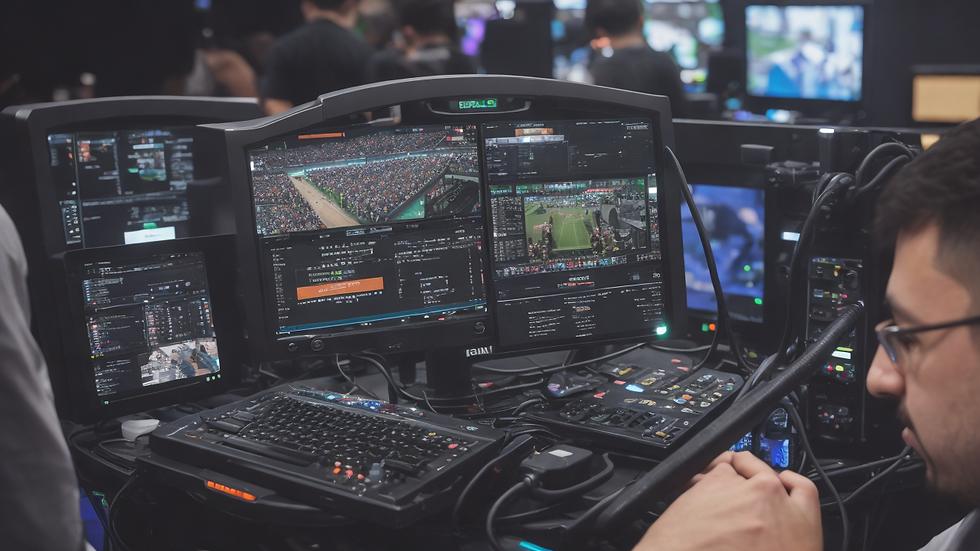
We knew broadcast feeds were crucial for attracting eyeballs and driving revenue. But what kind? High-definition, multi-cam feeds via AV over IP became our holy grail. Forget patching video cables across the concourse – that's messy, slow, and limits flexibility.
So, we deployed a robust AV over IP infrastructure, specifically designed for broadcast quality needs on the venue floor too. This involved strategically placing high-performance network switches (no cheap stuff here!) along both main corridors and secondary paths leading to premium seating areas like club seats or luxury boxes. We focused heavily on low-latency encoding/decoding techs – zero tolerance for that annoying lip-sync lag!
Our implementation included:
CCTV Integration: Video feeds from security cameras, concourse monitoring points (those little screens near the washrooms are key!), and vendor zones directly into the broadcast director's control room interface via a dedicated IP stream. This was less about surveillance and more about proactive management.
Concourse Camera System: A secondary network of strategically placed cameras for instant replays or capturing specific fan moments, feeding back seamlessly to the main feed without impacting critical broadcast bandwidth.
The transformation wasn't just visual; it allowed our operations staff to react faster during events. If a camera angle needed switching based on crowd reaction in a particular zone, we could do it instantly from the control room rather than waiting for someone to physically swap inputs – game-changing stuff!
Venue Wi-Fi Infrastructure: Connecting Fans Digitally (Hotspot Deployment Details)
Our fans expect instant connectivity; they're like tiny digital birds chirping constantly. We couldn't have them tethered to individual jacks or relying on slow, ad-hoc networks! A robust, secure venue-wide hotspot was mandatory.
We implemented enterprise-grade Wi-Fi:
Dual Network Approach: Separated the guest network from our critical operational IP traffic (like broadcast feeds and POS data). This is non-negotiable for stability.
Network Segmentation: Used VLANs extensively to isolate different types of guest traffic – general browsing, streaming video, large file downloads. Prevented one thirsty fan downloading a 4K movie marathon from dragging the entire network down.
Deployment Strategy: Placed access points strategically throughout the venue, focusing on high-density areas like concourses, club seats, and team benches. Ensured adequate overlap to eliminate dead zones – nothing worse than being stuck in the middle of nowhere without your phone.
Security was paramount:
We enforced strict WPA3 encryption for all connections.
Implemented robust authentication methods (like social logins or branded portals) instead of open networks where everyone could see everything else's data footprint. This helped manage bandwidth and added a layer of fan privacy, though the idea of being anonymous on your own turf is appealing!
We had fallback roaming options for devices that struggle – perhaps even dedicated Wi-Fi zones near food stalls or restrooms.
The impact? Fans could share experiences via social media, check scores from their seats (yes, sometimes necessary!), and stream content without disrupting our core operations. It became a baseline expectation, not an extra feature.
POS Integration: Beyond Ticket Sales - Real-time Game-Day Insights
Point of Sale wasn't just about snacks and merch anymore; it was part of the intelligence network! Integrating our various concession stands, merchandise booths (especially those unique to specific teams or events), and even bar services into a unified system provided invaluable real-time data.
We rolled out integrated POS terminals:
Scalability: We chose systems that could handle numerous concurrent users – think busy Friday night rush at the beer garden!
Visibility: Data flowed directly to an operational dashboard, accessible to floor staff, event managers, and even marketing teams for post-event analysis. Seeing real-time trends across different zones helped guide inventory decisions mid-game.
Payment Flexibility: NFC (Near Field Communication) payment capabilities became standard on all terminals.
The biggest game-changer was the real-time data:
We could instantly see which concession items were flying off – guiding staff to replenish stock if needed, or adjusting menu prices based on demand. More importantly, we knew fan preferences while they were happening.
We integrated this with our venue Wi-Fi network's bandwidth monitoring – a spike in video streaming correlated (or sometimes contrasted) with high data consumption from fans waiting for their orders.
This integration went far beyond convenience; it turned potentially chaotic floor requests into actionable intelligence, allowing us to optimize fan flow and anticipate needs. It also simplified reporting and financial tracking across the entire venue operation.
Mobile Ticketing Rollout: Securing Entry Without Compromising Fan Flow
Let's face it, paper tickets are slow, cumbersome, and prone to errors (like losing your stub right after buying it). We needed a faster way for fans to enter our arena – secure and efficient. Mobile ticketing was the answer, but we couldn't just hand over their phones.
We focused on NFC/QR Implementation:
NFC: For those with specific devices (iPhone users mostly), contactless entry via tap-to-enter technology integrated directly into our turnstiles and club gates.
QR Codes: A more universal approach, requiring a slightly larger phone presence but still much faster than scanning barcodes or paper tickets.
The key was frictionless integration:
Ticket validation happened seamlessly within the venue network (ideally offloading processing from the main broadcast backbone).
We ensured our entry system communicated with our security and operations systems – triggering alerts if discrepancies were found, like someone trying to enter without a ticket but having booked premium seats online.
This approach significantly reduced wait times at gates. No more searching for stubs or fumbling in wallets! It also improved the fan experience (get your phone ready before you reach the turnstile!) and provided better data on entry patterns compared to older methods.
The Synergy Challenge: Integrating Four Pillars into One Live-Event Network
Now came the hard part. We had these four powerful pillars – broadcast, Wi-Fi, POS, mobile ticketing – each built for a specific purpose but operating independently. Our goal was one seamless network providing unified data and control.
This is where the integration architecture became critical:
Centralized Management: A single dashboard to monitor all systems (network health, security feeds, concession sales, entry points) needed to be established.
Unified IP Fabric:** The entire backbone – AV over IP, Wi-Fi, POS, security – ran on a common, robust network infrastructure. This wasn't just about connectivity; it was about ensuring bandwidth priority and QoS (Quality of Service).
Data Interoperability:** APIs were the magic word here! We needed these systems to talk to each other intelligently without requiring everyone to speak Klingon.
The biggest hurdles involved:
Prioritization: How do you tell a video stream, crucial for national broadcast partners, that it has higher priority than the data from a few hundred snack purchases? Careful QoS settings on our switches were essential.
Privacy Concerns: Integrating mobile ticketing with POS and CCTV raised immediate flags. We had to implement strict data handling protocols, anonymizing where appropriate, and ensure fan consent was respected (even if they didn't explicitly say 'yes').
It required meticulous planning, constant testing during events, and maintaining open communication between all departments – the hardest part often being getting everyone on board with the why behind it. But seeing those systems work in concert? Worth every bit of effort.
Our Strategic Approach to AV over IP Integration for Broadcast-Quality Operations on the Floor
We didn't just slap some generic switches and cables everywhere. We treated our network like a precision instrument:
Network Design: Layered architecture – separate physical segments if necessary, but heavily prioritized logical separation via VLANs within an enterprise-grade switch fabric.
Latency Minimization: Chose encoding/decoding hardware strategically to minimize delays for critical feeds (security camera views) impacting floor operations. Low-latency IP video was key.
Bandwidth Planning: Heavily involved our broadcast team, security teams, and venue managers in capacity planning from day one. We allocated sufficient resources upfront.
We focused on creating a resilient network:
Redundancy wasn't just recommended; it was built into every critical link – power supplies (UPS!), physical connections, switch stacking.
Quality of Service (QoS): Implemented granular QoS policies to ensure that even during peak times (like a major incident or high-definition replay), mission-critical data for security, broadcast, and operations didn't get bogged down.
Our approach was holistic: the network wasn't just infrastructure; it was the nervous system connecting all aspects of our live-event environment. We chose technologies not just based on specs but on how they would interoperate with our existing systems (including POS hardware) and scale for future needs.
Key Takeaways from Our Deployment Journey
Our journey integrating broadcast, Wi-Fi, POS, and mobile ticketing into a unified system wasn't flawless, but the lessons learned are invaluable:
Start Unified: Don't treat these as separate projects. Plan integration from day one – it's cheaper, faster, and yields better results.
Prioritize and Segment: A common IP fabric is possible, but essential to implement strict network segmentation and prioritization (QoS) right away to prevent chaos on the floor or disruption in broadcast feeds. Keep your operational data clean!
AV over IP Power: Seriously consider an AV over IP solution for more than just broadcasting – it provides incredible flexibility for security cameras, concourse monitoring, and even potential signage integration.
Data is Double-Edged Sword: Integration brings intelligence, but be mindful of privacy implications. Implement clear data handling policies that respect fan expectations (and perhaps legal requirements).
Robustness Isn't Optional: Your network must withstand high usage, handle failures gracefully, and prioritize security above all else – especially when dealing with sensitive feeds.
Cross-Department Collaboration is Crucial: This isn't just an IT project. Success hinges on partnership between sales, marketing (for broadcast), security, operations, and finance teams from the very beginning.
Building interconnected live-event networks takes time, resources, and a shift in thinking beyond siloed systems. But trust me, as our Arena IT Director, the payoff – smoother game-day operations, better fan experiences, and truly unified control – is absolutely transformative for any mid-market venue group willing to embrace it.


Comments