
AI is transforming everything from phones to cars
- Marcus O'Neal

- Dec 15, 2025
- 8 min read
The tech world is buzzing with the ongoing AI revolution, and it’s not just about chatbots anymore. AI is reshaping tech, embedding intelligence deep into the products we use daily. From the silicon chips in our phones to the complex systems guiding autonomous vehicles, artificial intelligence isn't just an add-on feature anymore. It's becoming the very essence of innovation, fundamentally changing how devices understand us, learn from us, and ultimately, function.
This isn't just a software upgrade; it's a paradigm shift. Products are no longer passive tools but increasingly active participants in our lives, anticipating needs and adapting behavior based on usage patterns, all powered by sophisticated AI algorithms. This deep integration means hardware and software are converging, creating a seamless, intelligent experience that feels less like interacting with separate components and more like communicating with a sophisticated system.
Let's break down how this transformation is playing out across different domains, making even the most complex tech feel increasingly intuitive and capable.
The AI Integration Revolution: How Products Are Born Digital

The core of the current tech boom lies in AI. Companies are leveraging large language models (LLMs) and specialized AI tools not just for user interfaces, but to fundamentally alter product design and functionality. OpenAI's GPT-5 Codex is a prime example; it's not just powering chatbots but is being integrated into the development of its own tools, creating a feedback loop where AI helps build more AI. This self-referential development cycle accelerates innovation.
We're seeing AI move from being a feature on a product to being the foundational intelligence behind it. This requires significant rethinking of architectures, moving away from rigid, pre-programmed systems towards more flexible, learning systems. The sheer volume of data generated by these intelligent products provides fertile ground for continuous improvement and adaptation.
The implications for product lifecycles are profound. Products aren't static anymore; they can evolve their capabilities based on user interaction and data analysis. This blurs the lines between traditional software updates and fundamental product evolution. The focus shifts from "what can the product do?" to "how can the product learn to do more?"
AI in the Heart of Hardware: From iPhones to Self-Driving Cars
Apple's integration of AI into its ecosystem, particularly with features leveraging on-device processing, highlights a crucial trend: AI doesn't always need to rely on the cloud. This approach enhances privacy and responsiveness, embedding intelligence directly into the hardware itself. Imagine an iPhone that understands your context and needs without needing to constantly ping external servers. This hardware-level AI integration is becoming standard.
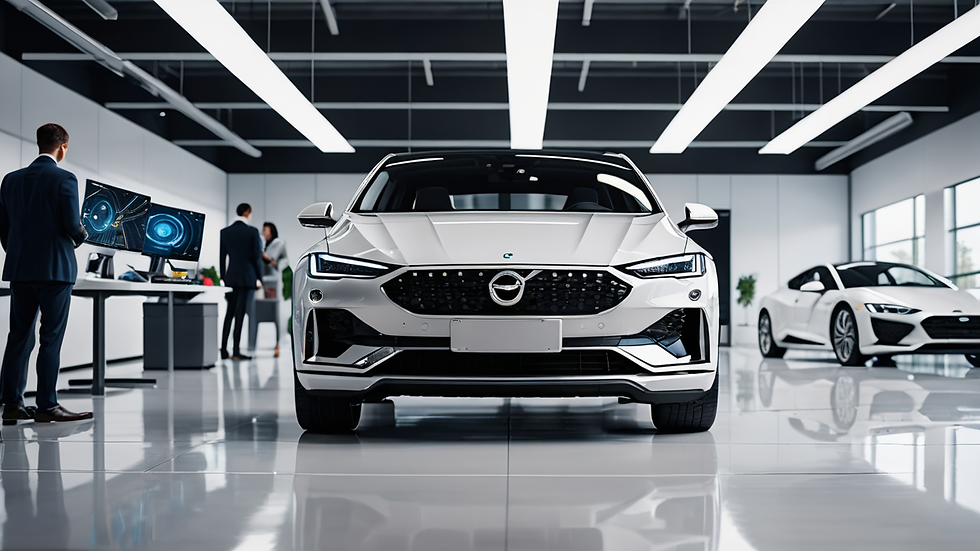
Then there's the automotive revolution. Self-driving cars represent the pinnacle of this integration. NVIDIA, a leader in graphics processing units (GPUs) essential for complex AI computations, is now manufacturing its own AI models like Nemotron-3. This allows for highly specialized, computationally intensive tasks needed for real-time perception, decision-making, and navigation. Carmakers are incorporating sophisticated AI systems that manage everything from adaptive cruise control to complex lane-changing maneuvers, requiring immense processing power handled by dedicated onboard AI systems.
Even established players like Toyota are jumping on the bandwagon, planning integrations with Apple's ecosystem, including features like Apple Car Keys. This synergy demonstrates how AI is becoming a universal language, enabling smoother interactions between different smart devices and vehicles. The intelligence isn't just in the car; it's part of a larger connected ecosystem.
Beyond Software: AI as the Core Function, Not Just an Add-On

One of the most significant shifts is the elevation of AI from a convenient feature to the central operating principle of many products. This means the core function – what the product fundamentally does – is driven by AI algorithms.
Consider voice assistants: they are, by definition, AI-driven interfaces. But newer products are pushing further. Smart home hubs aren't just controlling devices; they are learning user routines and suggesting actions. Smart refrigerators aren't just storing food; they might analyze contents, suggest recipes, and even order groceries. The underlying intelligence defines the product's value proposition.
This requires a fundamental change in how engineers think about product design. Traditional software development focused on predefined rules and logic. AI-driven development demands a focus on data, learning algorithms, and creating systems that can handle ambiguity and make decisions based on probabilities and learned patterns. The product's "brain" is AI, influencing everything from user interaction to autonomous operation.
The user experience is consequently more dynamic and personalized. Instead of fixed features, users interact with systems that adapt and evolve. This isn't just "smarter" software; it's software that fundamentally is intelligent, changing the nature of the product itself.
AI Fixes What? From Video Silences to Security Blind Spots
AI isn't just adding capabilities; it's actively addressing longstanding problems and limitations in consumer electronics and software.
Noise-cancelling headphones have evolved. AI algorithms can now distinguish between ambient noise and human speech, providing clearer audio in noisy environments or even transcribing conversations on the fly. Smart speakers are getting better at understanding commands amidst background noise, thanks to sophisticated AI signal processing.
Video calling, often plagued by awkward silences or poor audio, is being improved. AI can now intelligently fill in gaps, reducing pauses and making conversations feel smoother. It can also enhance video quality, upscale lower-resolution feeds, and even identify and blur potentially unwanted elements within the frame.
Security is another critical area. AI is being used to enhance cybersecurity measures. It can analyze network traffic patterns to detect anomalies that might indicate a breach, often spotting threats that traditional signature-based methods miss. AI-powered tools can also help manage complex passwords by suggesting strong, unique ones and even autofilling them securely, reducing user friction while improving security posture.
However, AI also introduces new security challenges. Malicious actors are learning to exploit AI models themselves, creating adversarial attacks that fool facial recognition or compromise autonomous systems. Ensuring the integrity and security of AI systems themselves is a growing concern.
What IT Pros Need to Know: Skills for an AI-Powered Product World
The rapid integration of AI into physical products means IT professionals need to adapt their skills and perspectives. Understanding AI is no longer a niche requirement; it's becoming fundamental for many roles.
Networking professionals must understand how AI systems communicate, often requiring specialized infrastructure for data transfer and compute resources. Cybersecurity experts need to learn to defend against AI-driven attacks and secure AI models themselves. DevOps engineers are increasingly involved in deploying and managing AI services embedded in products.
Beyond specific technical skills, IT professionals need a broader understanding. They need to grasp the AI reshaping tech implications for product lifecycles, data management strategies for the massive amounts of data generated by intelligent products, and the potential for AI to automate or augment existing IT tasks.
Learning resources are abundant, from online courses to vendor certifications. Focus on building a foundation in machine learning concepts, data handling, and ethical AI deployment. Understanding the limitations and potential pitfalls of AI is just as crucial as mastering its capabilities.
The Challenges: When AI Gets It Wrong—and How to Fix It
Despite the immense potential, the widespread integration of AI into everyday products isn't without its hurdles and risks.
Bias is a major concern. AI systems learn from data, and if that data reflects societal biases, the AI can perpetuate or even amplify them. This could lead to unfair outcomes in areas like loan approvals, job applications, or even security access. Ensuring diverse and representative training data, along with ongoing monitoring and bias mitigation techniques, is essential.
Privacy remains a critical issue. As products become more intelligent and context-aware, they collect vast amounts of user data. While on-device processing helps, there's still a need for robust privacy frameworks, transparent data usage policies, and user control over their data. Regulatory landscapes are evolving, but companies must proactively address privacy concerns to build trust.
AI systems can also be vulnerable to malicious use. Imagine an AI controlling a car being fooled by a simple sticker, or an AI-powered security system being tricked into unlocking a facility. Adversarial testing and robust security measures are vital.
Furthermore, the sheer pace of AI development can be challenging. Keeping up with the latest models, understanding their implications for product design, and effectively managing the integration requires continuous learning and adaptation from both developers and businesses.
The Future's Here: AI Products That Think Like Humans (Eventually)
The trajectory points towards increasingly sophisticated AI capabilities integrated seamlessly into our world. We're moving towards AI systems with greater contextual understanding, the ability to reason about complex situations, and potentially even creative capabilities.
Imagine smart homes that anticipate needs with uncanny accuracy, or wearable devices that provide personalized health insights based on deep analysis of biometric data. AI will likely become even more proactive, not just reactive.
The goal isn't necessarily human-level consciousness, but AI that can perform complex tasks reliably and understand human intent in nuanced ways. This requires ongoing research in areas like explainable AI (XAI), making AI decision-making processes more transparent, and multi-modal learning, enabling AI to understand and process information from different forms (text, audio, vision).
As AI reshapes tech, the boundaries between human and machine intelligence will continue to blur, leading to products and systems that are more intuitive, capable, and ultimately, more helpful in our daily lives.
Your Takeaway: Is Your Company Ready for an AI Makeover?
The integration of AI into hardware and core product functions isn't just a trend for tech enthusiasts; it's becoming a fundamental aspect of modern product development. Companies looking to remain competitive need to embrace this shift. This means investing in AI expertise, both technical and strategic, rethinking product design principles, and developing robust data and security frameworks.
Are you ready for your company's AI makeover? It requires leadership commitment, cross-functional collaboration, and a willingness to experiment and learn. The future of tech is AI-driven, and businesses that adapt will lead the way, creating smarter, more intuitive products that fundamentally change how people interact with technology.
---
Key Takeaways:
AI is moving from a software feature to the core intelligence driving product innovation.
Hardware is evolving to support AI, with on-device processing becoming more common.
AI is integrated into diverse products, from smartphones and smart home devices to self-driving cars.
Benefits include improved user experiences, better problem-solving, and enhanced capabilities.
Challenges include addressing bias, ensuring privacy, securing AI systems, and keeping up with rapid development.
IT professionals and businesses need to develop new skills and strategies to effectively leverage and manage AI.
The future involves more sophisticated, context-aware AI products seamlessly integrated into daily life.
--- Q1: What does it mean when people say AI is "reshaping tech"? A: It means AI is moving beyond being a simple tool or feature into the fundamental operating principle of many technologies. It's becoming the core intelligence that drives product design, functionality, and user interaction, fundamentally changing how devices work and how we interact with them.
Q2: Can AI in everyday products really "think" like humans? A: Current AI systems can perform specific tasks intelligently, like recognizing images, understanding language, or making decisions based on data. However, achieving human-like general intelligence, reasoning, and consciousness is still a long-term research goal and not yet a reality. AI will become more sophisticated and capable, blurring lines, but true human-like thinking remains distant.
Q3: How can companies get started with integrating AI into their products? A: Start by identifying areas where AI could provide significant value or solve existing problems. Build or acquire AI expertise, invest in data infrastructure (AI learns from data!), and begin experimenting with pilot projects. Focus on clear use cases and manageable first steps rather than trying to implement everything at once.
Q4: Is AI integration only relevant for large tech companies? A: No. While large companies have more resources, the tools and knowledge for AI integration are becoming more accessible. Smaller companies can leverage cloud-based AI services, use existing open-source models, or partner with AI specialists. The key is identifying a relevant application and starting the learning process.
Q5: What are the biggest risks associated with AI in consumer products? A: The biggest risks are bias (leading to unfair outcomes), privacy concerns (due to vast data collection), security vulnerabilities (AI systems can be hacked), and potential misuse (like generating deepfakes or controlling autonomous systems maliciously). Addressing these requires careful design, ethical guidelines, robust security, and transparency.
---
Sources:
https://arstechnica.com/ai/2025/12/how-openai-is-using-gpt-5-codex-to-improve-the-ai-tool-itself/
https://www.zdnet.com/article/as-meta-fades-in-open-source-ai-nvidia-senses-its-chance-to-lead/
https://www.wired.com/story/nvidia-becomes-major-model-maker-nemotron-3/
https://www.macrumors.com/2025/12/15/toyota-to-gain-apple-car-keys-support/
https://www.theguardian.com/business/2025/12/15/universal-basic-income-ai-andrew-yang


Comments