
AI Hardware Shortages: Supply Chain Shift
- Samir Haddad

- Dec 17, 2025
- 7 min read
The tech world is buzzing with talk of AI, but beneath the surface lies a quieter revolution: the scramble for specialized hardware. As generative AI models grow exponentially, demanding ever more computational power, a ripple effect is being felt across the global supply chain. This isn't just about faster processors; it's fundamentally reshaping how hardware is produced, distributed, and perceived. Welcome to the era defined by AI hardware shortages and the complex adjustments they necessitate.
AI's Appetite: How Generative AI is Driving Hardware Shortages

The recent explosion of powerful generative AI models – from text-to-image generators to sophisticated chatbots – has created an unprecedented demand for computational horsepower. These models require massive amounts of data to train and run efficiently. Training alone involves trillions of calculations, pushing the limits of conventional computing. This intense computational load is primarily handled by specialized processors, most notably graphics processing units (GPUs) designed for parallel processing. The sheer volume of AI model training and deployment has created a perfect storm, driving up demand for GPUs far beyond what was previously needed for tasks like video rendering or scientific simulations. Factories worldwide are struggling to keep pace, leading to significant backlogs and soaring prices for key components. This escalating demand is the primary driver behind the current wave of AI hardware shortages, impacting everything from gaming rigs to enterprise data centers.
The New Hardware Reality: GPUs, Memory, and the AI Datacenter Arms Race
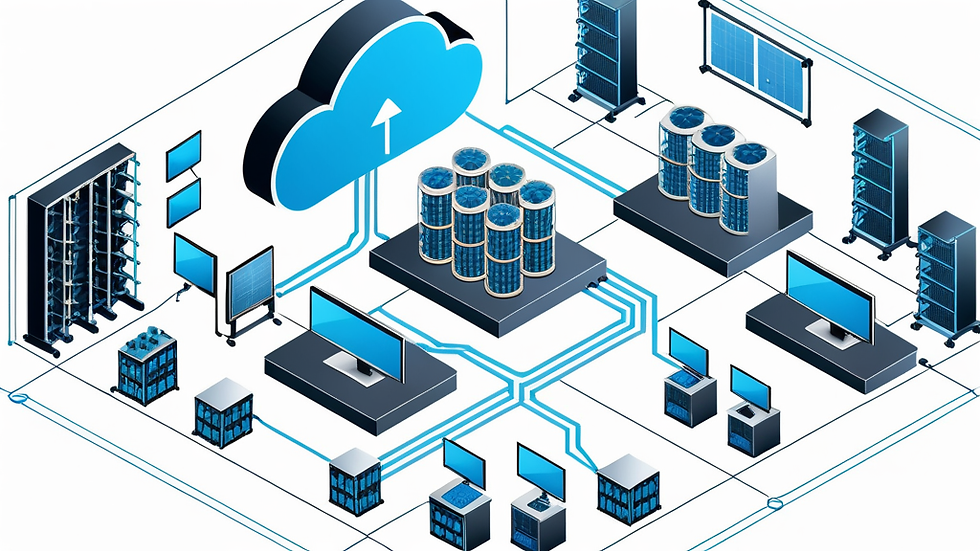
The heart of the current bottleneck lies in Graphics Processing Units (GPUs) and their close cousins, Application-Specific Integrated Circuits (ASICs) and Tensor Cores found in chips like NVIDIA's H100 or AMD's MI300 series. These chips are purpose-built for the matrix multiplications and parallel computations that are fundamental to deep learning and running large language models. However, manufacturing these specialized chips is complex and resource-intensive. The demand spike from AI has pushed fabrication plants (fabs) to their limits. Reports suggest leading manufacturers are facing capacity constraints, forcing them to prioritize AI workloads over other graphics applications. This isn't just about GPUs; the memory hungry nature of AI models means there's also immense pressure on High Bandwidth Memory (HBM) and other specialized memory technologies designed to feed data rapidly to these powerful processors. Companies are investing billions to expand fabs and develop new processes, but catching up takes time. This ongoing AI hardware shortage is fueling an intense "arms race" among cloud providers and enterprises, who are constantly vying for limited resources, sometimes leading to premium pricing for access to AI capabilities. The result is a landscape where hardware scarcity directly impacts the speed and availability of AI services.
Software Evolution: AI-native Applications Reshape Development Practices
The pressure to build increasingly powerful AI systems isn't just driving hardware demand; it's also forcing a fundamental shift in software development. Traditional software development cycles, focusing on sequential processing, are proving inadequate for the scale and complexity of modern AI systems. Developers are increasingly adopting AI-native development practices. This often involves leveraging large pre-trained models for specific tasks (prompt engineering), rather than training entirely new models from scratch for every application, which is computationally prohibitive. We're seeing a rise in frameworks and tools designed specifically for deploying and managing AI models at scale. This includes serverless AI functions, specialized AI orchestration platforms, and frameworks that simplify the integration of pre-built models into existing applications. Furthermore, the development process itself is evolving, with more focus on data curation, model fine-tuning, and robust testing methodologies tailored for AI. This software evolution is a direct response to the hardware constraints, pushing developers to be more efficient and strategic in how they utilize the scarce computational resources. Building AI applications now often involves a deeper understanding of hardware limitations and optimization techniques.
Browser Extensions and the AI Data Collection Trend: Privacy Implications
The demand for AI isn't limited to large corporations. Even seemingly innocuous browser extensions are increasingly leveraging AI, often for features like enhanced translation, content summarization, or personalized browsing suggestions. These extensions frequently request extensive permissions, including access to browsing history, search queries, and even camera feeds, raising significant privacy flags. The underlying hardware demand here is less about massive data centers and more about the cumulative effect of millions of users running lightweight AI algorithms directly in their browsers or relying on cloud-based AI services provided by extension developers. This proliferation of AI-powered browser tools contributes to the overall strain on AI infrastructure, while simultaneously highlighting a critical societal concern: the trade-off between convenient AI features and user privacy. As users adopt these tools, the data generated feeds training datasets for more powerful models, creating a cycle that further intensifies the hardware demands discussed earlier. Understanding these privacy implications is crucial for developers and users navigating the AI landscape.
Security Under Pressure: AI's Role in Exploits and Defense Strategies
The rapid development and deployment of AI, coupled with the scramble for specialized hardware, haven't escaped the attention of the cybersecurity world. On one hand, AI is being touted as a powerful tool for defense, promising advanced threat detection, predictive analytics, and automated incident response. Security firms are developing AI-powered tools to identify novel malware patterns and vulnerabilities faster than human analysts alone could. However, the same technology is proving attractive to malicious actors. Reports detail sophisticated AI-powered phishing campaigns that generate highly personalized and convincing scams at scale. Deepfake technology, requiring significant computational resources, is becoming more accessible, enabling realistic voice and video impersonation. Attackers are also exploring ways to specifically target the supply chain for AI hardware, potentially aiming to compromise components or insert vulnerabilities during manufacturing or distribution. This creates a complex security landscape where AI is both a potential shield and a powerful sword. Security teams must now consider hardware integrity as part of their defense posture and develop strategies to counter AI-fueled threats, while also ensuring the AI systems themselves are secure and robust. The AI hardware shortage indirectly fuels this security dilemma by concentrating vulnerable hardware in high-value targets.
Enterprise Focus: Companies Diversifying into AI Infrastructure (Ford's Example)
The impact of AI hardware shortages isn't just felt in the data center or the gaming PC market. Even traditional heavyweights are pivoting. A prime example is Ford, which is reportedly shifting some of its battery production focus from electric vehicles (EVs) to data centers. This strategic move highlights a broader trend: established manufacturers are recognizing the massive scale and resource requirements of AI infrastructure. Building large-scale AI data centers requires significant amounts of specialized hardware, cooling systems, and energy, similar to manufacturing complex EV batteries. Ford's pivot signals a diversification strategy, leveraging its manufacturing expertise to meet the burgeoning demand for AI hardware components. This move underscores the economic reality that building AI systems requires substantial physical investment, and companies capable of mass-producing complex hardware are now key players in the AI ecosystem. Such diversification is likely to become more common as the AI race heats up, potentially leading to new competition in the hardware space.
Market Shifts: Software Deals (Digital Signage) Amid Hardware Backlogs
The tangible impact of hardware shortages isn't just limited to the tech elite. Businesses relying on specific hardware components face operational hurdles. One visible example is the digital signage market. Integrators and manufacturers report delays in receiving essential hardware components like processors and displays needed for large-scale deployments. To navigate these supply chain disruptions, companies are increasingly turning to software solutions. Cloud-based digital signage platforms, for instance, allow content management and display rendering to happen remotely, reducing the need for powerful local hardware. This shift towards software-as-a-service (SaaS) models for hardware-dependent applications is becoming a common workaround. Furthermore, strategic partnerships and direct negotiations with Original Equipment Manufacturers (OEMs) are crucial for securing critical hardware, even amidst backlogs. Companies are also exploring alternative components or phasing out less popular models to mitigate risks. This adaptation demonstrates how businesses across sectors are responding to the practical constraints imposed by the AI hardware shortage, seeking more flexible and resilient solutions.
The Future Horizon: What Comes After Current AI Hardware Gluts?
While current hype often focuses on the scarcity of today's AI hardware, looking ahead reveals another challenge: what happens when the initial glut of capacity meets oversupply? Reports suggest that while demand is currently strained, there might be a significant amount of AI accelerator capacity coming online in the next few years, potentially leading to an oversupply situation. This transition from shortage to glut presents its own set of challenges. Hardware manufacturers will need to innovate constantly, developing more efficient, specialized, or smaller-scale AI chips to avoid obsolescence. Software developers will need to adapt their models and applications to leverage these new hardware capabilities effectively. We might see a move towards more specialized hardware tailored for specific AI tasks, rather than one-size-fits-all solutions. Energy efficiency will become an even more critical factor as the environmental impact of training and running AI models comes under greater scrutiny. The continuous push for larger, more capable models will inevitably drive hardware innovation, ensuring the supply chain remains dynamic, even as it navigates the complexities of current AI hardware shortages and future potential gluts.
---
Key Takeaways
GPUs, memory, and specialized AI chips are the primary bottleneck.
Software development is evolving towards AI-native methodologies.
Supply chain adjustments and diversification are becoming necessary.
Security risks are increasing alongside AI adoption.
Businesses are finding workarounds, like software solutions, for hardware delays.
Constant innovation is key to navigating future supply and demand cycles.
---
FAQ
Q1: What exactly is causing the AI hardware shortage? A: The primary cause is the exponential growth of powerful generative AI models, which require vast amounts of computational power, primarily delivered by specialized GPUs and other AI accelerators. This demand has overwhelmed current manufacturing capacity.
Q2: How does the AI hardware shortage affect everyday users? A: Users may experience higher prices for consumer electronics (like gaming PCs or phones with AI features) due to component scarcity. They might also face delays in accessing certain cloud-based AI services or see fewer new features rolled out if hardware partners are constrained.
Q3: Are companies developing alternatives to current AI hardware? A: Yes, there is significant research and investment into alternatives, including more efficient ASICs, novel memory technologies, and even optical computing approaches. Companies are also exploring software optimizations to reduce the need for the most powerful hardware.
Q4: What role does energy consumption play in AI hardware issues? A: High energy consumption is a major factor. Training large AI models requires immense power, impacting data center costs and environmental considerations. This drives demand for efficient cooling and energy-efficient hardware, adding another layer to the supply chain complexity.
Q (Optional): Will the AI hardware shortage ever fully resolve? A: It's a complex issue. While capacity is being expanded, demand remains incredibly high. Resolution likely involves a combination of continued manufacturing capacity increases, hardware innovation for efficiency, and perhaps a shift in focus towards more specialized or distributed AI compute models.
---
Sources
[Google News Article](https://news.google.com/rss/articles/CBMirwFBVV95cUxOTVc2cVMyYnR0MXd0aXZsckFYMmI0RkVPQ2FzUEN5SEZua0lkQ3lTZldSVk84NGFGZ2FLY2RUUlNxazkyZVp5NThOaHk2VnlhZTZIVU5hV1hia2NCTEluN3Rtdjluc0RtYXJDUmpCcFlPcS1VblEwSlUyOHdJeS1haF9Yd3puaVY5Zi05QWNHdm1JQ2J2WGh6TWZ0bWJmX2d1dGRZRVJoaHZ3UW9Rb0R3)
[Nvidia GPU Production Cut 2026 AI RAM Shortage](https://www.windowscentral.com/hardware/nvidia/nvidia-gpu-production-cut-2026-ai-ram-shortage)
[Hackers Access Pornhub Premium Users Viewing Habits](https://www.theguardian.com/technology/2025/dec/17/hackers-access-pornhub-premium-users-viewing-habits-and-search-history)
[Ford Is Switching Some Battery Focus From Cars to Data Centers](https://www.techradar.com/pro/ford-is-switching-some-battery-focus-from-cars-to-data-centers-with-plans-for-huge-20gwh-capacity)
[Samsung VXT Digital Signage Cloud Software Deal](https://www.zdnet.com/article/samsung-vxt-digital-signage-cloud-software-deal/)


Comments