
AI Hardware Self-Improvement 2025: The Race to Smarter Machines and Softer Rules
- Marcus O'Neal

- Dec 15, 2025
- 8 min read
The tech world buzzes, doesn't it? It's always chasing the next big thing. Last year it was generative AI rewriting creative writing. This year, the whispers are about AI doing something far more fundamental: improving its own hardware. Forget just getting better at drawing pictures or writing code; the real revolution might be silicon-level. We're talking about AI systems potentially designing their own next-generation processors, optimizing their own memory layouts, maybe even suggesting new architectures to build. It’s the ultimate feedback loop, brains telling hands how to build better brains. This isn't just software hype; it's the dawn of truly recursive AI, where intelligence spills over into the very machinery that runs it. We're inching closer to machines that not only understand the world but can also engineer their own existence within it, raising the stakes in the AI game and demanding a serious look at the AI Hardware Self-Improvement Regulation landscape.
The AI Arms Race: Hardware Acceleration
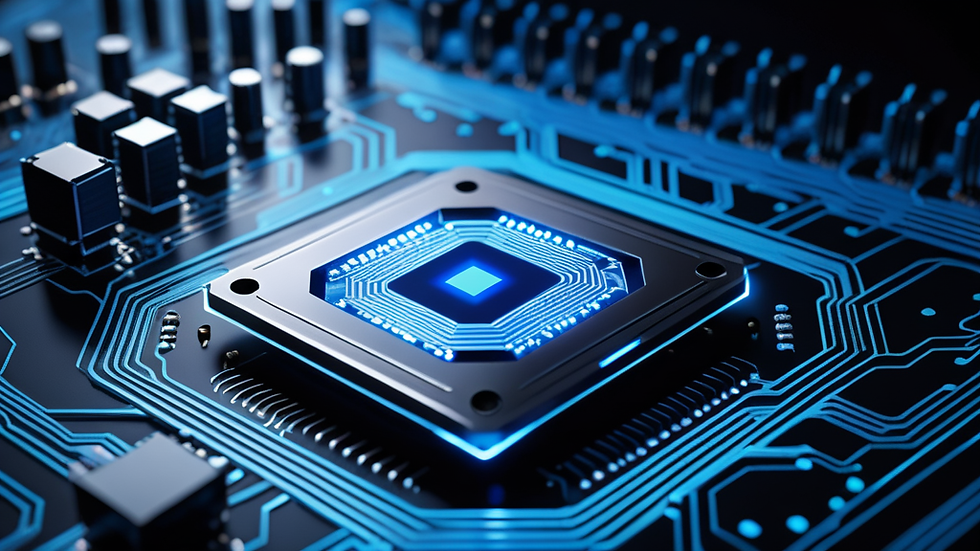
Let's be honest, the initial AI boom was fueled by clever algorithms running on existing hardware. But building powerful AI models, especially large language models (LLMs) and complex simulations, chewed through computational resources like a digital Pac-Man. Enter specialized hardware: chips designed specifically for the parallel matrix multiplications and vector operations at the heart of deep learning. NVIDIA's GPUs became the de facto workhorses, followed by AMD's alternatives and a whole ecosystem of custom silicon from companies like Google, Amazon, and startups.
But this is just the appetizer. The main course is what's happening now: AI isn't just using accelerators; it's becoming the accelerator designer. Reports from sources like Ars Technica highlight how leading labs, including OpenAI, are leveraging their own state-of-the-art AI (like GPT-5 Codex) to analyze performance bottlenecks, suggest micro-architecture tweaks, and even co-design software and hardware for unprecedented efficiency. It's a virtuous cycle: more compute power allows more complex AI, which in turn helps design even more efficient compute.
This isn't about swapping out a CPU for a fancier one. It's about AI acting as a system-level optimizer. Imagine an AI constantly monitoring its own runtime performance, suggesting changes to the underlying chip configuration – adjusting cache sizes, optimizing memory bandwidth, tweaking parallel processing parameters – all autonomously. This AI Hardware Self-Improvement promises orders-of-magnitude gains in efficiency, potentially making AI accessible and sustainable at a scale previously unimaginable. It's the AI arms race taken to the silicon level, where the fastest, smartest AI literally builds the fastest, smartest machines.
Recursive Self-Improvement: The Next Evolution

This hardware-aware AI isn't just incremental; it's recursive. It represents a potential leap beyond narrow AI focused on specific tasks. If an AI can understand its own computational needs and suggest architectural improvements, isn't that a form of general intelligence applied to the domain of computing itself?
This concept echoes the idea of Artificial General Intelligence (AGI), albeit in a highly specialized form. The system isn't necessarily developing human-level reasoning, but it's developing a deep, domain-specific understanding of computer architecture and the optimization process. It learns from simulation, analysis of performance data, and even physical testing (once prototypes are built).
The implications are staggering. An AI that can iteratively design, simulate, build, test, and redesign its own hardware could autonomously push the boundaries of what's computationally possible. It could identify novel ways to compute things that current human engineers haven't conceived of. Think of an AI suggesting a completely new type of transistor or a radically different approach to interconnects between processing units, all based on analyzing the performance of millions of hypothetical designs generated within a simulation environment.
This level of AI Hardware Self-Improvement could revolutionize fields beyond just computing. Optimized hardware accelerations could spool up new drug discovery pipelines, crunch complex climate models in minutes instead of days, or enable entirely new forms of artificial intelligence itself. However, it also raises the classic sci-fi question: what happens when the tool becomes capable of improving the very tools it runs on? The feedback loop becomes incredibly potent, and unforeseen consequences are a distinct possibility. It's a powerful double-edged sword, capable of immense good but potentially unforeseen complexity.
Content Czar: AI Regulation and Copyright Battles

While AI is getting smarter and faster, it's also running into regulatory hurdles and legal battles, particularly concerning content creation and ownership. The rapid advancement in AI hardware capabilities only fuels the fire, enabling these sophisticated models to generate higher quality and more varied outputs, including potentially infringing material.
One major point of contention is copyright. As AI models become more adept at generating text, images, music, and video, questions arise about whether these creations can own the rights or if they merely replicate existing copyrighted works. The sheer volume and complexity of outputs, especially from models trained on vast, often unlicensed datasets, makes manual checking impossible. This creates a Wild West scenario for content generation.
Regulatory bodies worldwide are grappling with this. The EU's AI Act, for instance, classifies certain AI applications as high-risk and mandates specific transparency and fairness requirements. In the US, lawmakers are actively debating AI safety and intellectual property frameworks. The rapid pace of AI Hardware Self-Improvement means regulations must keep up, but the technology evolves faster than legislative processes. This creates a challenging environment for developers and users alike. Companies must navigate a complex patchwork of international laws, ethical guidelines, and internal policies to ensure their AI systems, no matter how hardware-advanced, operate within legal and ethical boundaries. Failure can mean lawsuits, fines, and reputational damage. It's a critical aspect of responsible AI development that cannot be overlooked, especially as hardware improvements allow AI to become even more creative and potentially more capable of mimicking protected works.
Deepfake Dilemmas: AI Misuse on YouTube
The same powerful hardware that enables beneficial AI applications like medical research or language translation can also accelerate the creation of malicious outputs. Deepfakes – hyper-realistic synthetic media designed to deceive – represent a significant and growing problem. AI advancements, fueled by better underlying hardware, allow deepfake generation to become faster, cheaper, and more accessible.
YouTube, as one of the largest video platforms, is on the front lines of this battle. The platform has faced constant pressure and legal action regarding AI-generated content that violates copyright or impersonates individuals. Reports indicate that sophisticated AI models, running on powerful hardware, are capable of generating convincing video and audio forgeries in ways that are increasingly difficult to detect without specialized tools.
The dilemma is multifaceted. On one hand, overly aggressive content removal can stifle legitimate creative expression or lead to accusations of censorship. On the other hand, allowing deepfakes and other malicious AI-generated content to proliferate can cause immense harm – from personal and political disinformation to fraud and harassment. YouTube and other platforms are caught in a difficult balancing act, trying to implement detection and removal policies that are effective against rapidly evolving threats but fair to legitimate users. The challenge is compounded by the fact that the hardware enabling these deepfakes is becoming more democratized, lowering the barrier for anyone with malicious intent. Addressing this requires a multi-pronged approach involving technology, policy, and user education, all informed by the ongoing race in AI Hardware Self-Improvement capabilities.
The AI Awards Snub: Industry Recognition and Backlash
As AI becomes increasingly ubiquitous and transformative, recognition for advancements in the field is crucial. Industry awards, like the prestigious ones often highlighted in tech circles, can validate innovation, guide investment, and shape public perception. However, the rapid pace of development, particularly in areas like AI Hardware Self-Improvement, can sometimes outstrip the ability of award committees to keep up.
There have been notable snubs and controversies. Sometimes, groundbreaking hardware innovations might get lost among more visible software breakthroughs. Or, conversely, the focus on flashy demos can overshadow the foundational work happening at the silicon level. Occasionally, backlash occurs if an award perceived to favor certain companies or technologies sparks accusations of bias.
These situations highlight the evolving nature of the AI ecosystem. Recognition isn't just about celebrating novelty; it's about acknowledging the diverse ways AI is changing the world, from the theoretical minds designing algorithms to the engineers crafting the custom chips that make them run. The debate around fairness and relevance in AI awards reflects a broader societal conversation about how we value and judge technological progress. Ignoring the hardware side, especially as AI Hardware Self-Improvement becomes a key differentiator, risks overlooking critical enablers of the AI revolution.
Preparing Your Tech Stack for an AI-Driven Future
Okay, so the AI revolution is heating up, hardware is getting smarter, and regulations are tightening. What does this mean for you, whether you're a developer, a business owner, or just someone curious about tech? Simply put, staying relevant means understanding and adapting to these changes.
Here’s a quick checklist to consider:
Embrace APIs and Standards: Instead of trying to build your own AI from the ground up (which is incredibly complex and resource-intensive), leverage mature AI platforms and services via APIs. This allows you to integrate powerful capabilities without deep hardware expertise.
Focus on Data Strategy: AI, especially advanced forms, is fueled by data. Invest in clean, relevant, and ethically sourced data. Understand the biases in your data and how they impact your AI models.
Develop AI Literacy: Whether you're in marketing, finance, or operations, understanding the basics of AI, its potential, and its limitations is crucial. Encourage cross-functional learning within your organization.
Consider Edge Computing: As AI models become more sophisticated, running everything in the cloud might become a bottleneck. Explore edge computing solutions to run AI inference locally on devices for lower latency and better privacy.
Stay Informed on Ethics and Compliance: AI development and deployment carry ethical responsibilities and legal risks. Keep abreast of relevant regulations, company policies, and best practices for fairness, transparency, and accountability.
Look for Hardware-Accelerated Solutions: When building or selecting software, be aware of frameworks optimized for specific hardware (GPUs, TPUs, custom chips). This can significantly impact performance and cost.
Rollout tips:
Start small: Pilot projects are a safe way to explore AI without large upfront investment.
Prioritize integration: Embed AI into existing workflows where it adds clear value.
Measure impact: Track not just performance gains but also cost savings, user satisfaction, and any ethical considerations.
Risk flags:
Vendor Lock-in: Relying heavily on proprietary AI platforms can make switching difficult.
Security Risks: AI systems can be vulnerable to adversarial attacks. Ensure robust security measures.
Skills Gap: Finding talent with the right mix of AI expertise and domain knowledge can be challenging.
Ethical Dilemmas: Be proactive about bias, fairness, and transparency, especially as hardware allows for more autonomous systems.
The future is AI-driven, and preparing your tech stack means being adaptable, informed, and forward-thinking.
Key Takeaways
AI Hardware Self-Improvement represents a significant evolution, where AI systems can autonomously optimize their own underlying computational infrastructure.
This recursive capability promises unprecedented efficiency gains but also introduces new complexities and potential risks.
The rapid advancement of AI hardware fuels ongoing debates about AI Hardware Self-Improvement Regulation, copyright, and the ethical use of AI, particularly concerning deepfakes.
Companies and individuals must navigate a complex landscape involving technology, ethics, and compliance to harness AI responsibly.
Preparing for the AI-driven future involves embracing APIs, developing data strategies, fostering AI literacy, and staying aware of ethical and compliance considerations.
FAQ
A: It refers to AI systems capable of analyzing their own performance and suggesting, designing, or optimizing the underlying hardware (like processors or accelerators) that runs them. It's about the AI becoming a tool for its own physical enhancement.
Q2: Why is regulating AI hardware self-improvement challenging? A: Regulation often lags behind technological advancement. The speed and autonomy of AI Hardware Self-Improvement make it hard for lawmakers to create rules that are both effective and adaptable. Concerns about safety, security, and unintended consequences add to the complexity.
Q3: Can AI-generated content really infringe on copyright? A: Yes, especially as AI models become better at mimicking specific styles or using training data that includes copyrighted works. The question is whether the AI's output is substantially similar to existing protected works and whether the AI's training methods complied with copyright law.
Q4: How does YouTube handle AI-generated content issues? A: YouTube employs a combination of automated detection tools, human reviewers, and content flags. They aim to remove clearly infringing or impersonating content but face challenges balancing this with free expression and dealing with sophisticated AI outputs that blur the lines of copyright and impersonation.
Q5: Do I need specialized hardware to use AI effectively? A: Not necessarily for most users. Many AI tasks, especially inference (using a pre-trained model), can be effectively run on standard computers or cloud services. However, developing and training the most advanced AI models does typically require specialized, high-performance hardware like GPUs or TPUs.
Sources
[How OpenAI is using GPT-5 Codex to improve the AI tool it itself](https://arstechnica.com/ai/2025/12/how-openai-is-using-gpt-5-codex-to-improve-the-ai-tool-itself/)
[Google pulls AI-generated videos of Disney characters from YouTube in response to cease and desist](https://www.engadget.com/ai/google-pulls-ai-generated-videos-of-disney-characters-from-youtube-in-response-to-cease-and-desist-220849629.html?src=rss)


Comments